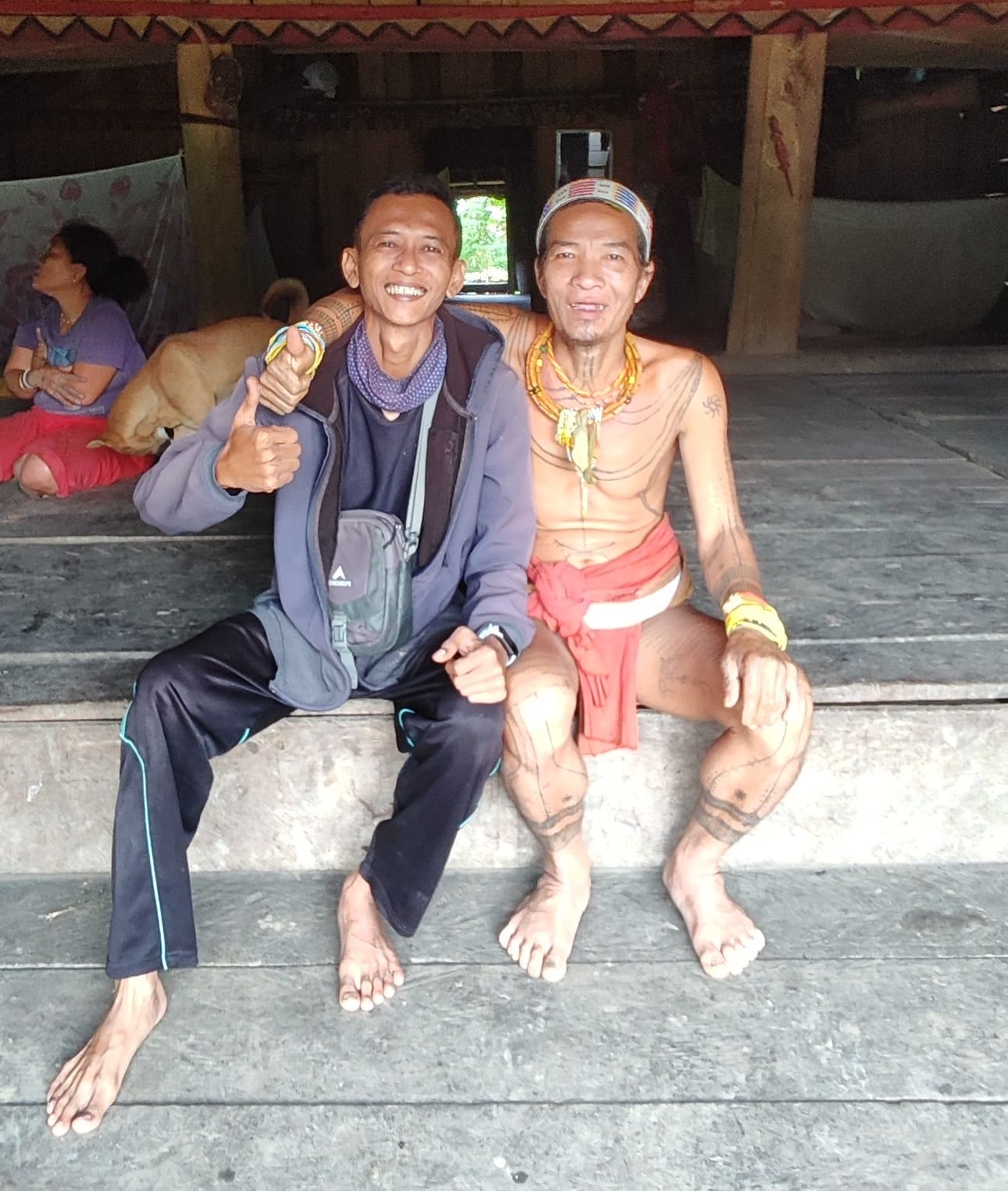
Mentawai Tribe Language: Key Phrases and Cultural Terms for Visitors
Before you arrive in the community forests of Siberut, a few words of the local language go a long way. The Mentawai people are accustomed to visitors — but the rare traveller who arrives knowing even a greeting or two earns instant warmth. This guide covers the Mentawai language family, key cultural vocabulary, and the role language plays in building genuine connection during a tribe tour. A few words with your host family are part of living with the Mentawai tribe.
As a 3rd-generation Mentawai veteran raising the 4th generation on Siberut, Andrian is fluent in Mentawai. On every tour, he serves as both guide and interpreter — bridging the gap between the community's language and your questions, curiosity, and stories.
The Mentawai Language: Background
The Mentawai language (also called Mentawei or Mentawi) belongs to the Austronesian language family, within the Malayo-Polynesian branch. It is closely related to the indigenous languages of the western Sumatran coast, though it has developed in relative isolation over centuries on the outer islands.
Approximately 30,000 people speak Mentawai as their primary language, predominantly on Siberut Island — where the authentic tribal culture of the Sikerei shamans is still actively practised. The language varies slightly between the four main Mentawai islands (Siberut, Sipora, North Pagai, South Pagai) and between different village clusters on Siberut itself.
Younger Mentawai people also speak Indonesian (Bahasa Indonesia) fluently — particularly those who have attended school in Padang. But deep in the forest settlements, Mentawai remains the primary language of daily life, ceremony, and community governance.
Essential Cultural Vocabulary
These are terms you will encounter on any Mentawai tribe tour — understanding what they mean enriches the experience significantly.
Key Phrases for Visitors
The following phrases are drawn from Andrian's daily communication with community members. Pronunciation is broadly phonetic — Mentawai vowels are similar to Indonesian. Andrian will teach you more during your tour.
| Situation | Mentawai Phrase | Meaning |
|---|---|---|
| Greeting / Farewell | Surak sabeu | Good wishes / safe travels / blessings — a warm farewell expression used between friends |
| Thank you | Mauliate / Terima kasih* | Thank you (*Indonesian is also widely understood and accepted) |
| Yes | Io | Yes / agreement |
| No | Tá | No |
| Good / Beautiful | Maeru | Good, beautiful, well done |
| Eat / Food | Mangan | To eat / food (similar to Javanese/Indonesian) |
| Water | Oinan | Water / river water |
| Forest / jungle | Okkak | Forest, jungle |
Language and the Sikerei
The Sikerei shamans communicate through the Mentawai language in daily life, in ceremony, and in healing rituals. Much of the ceremonial vocabulary is specialised — terms for spirits, plants, healing chants, and ritual objects that are not part of everyday speech. Andrian translates and explains these during tours, providing cultural context that makes the experience significantly richer than a silent observation.
Many Sikerei shamans speak no Indonesian and very little of any language other than Mentawai. This is precisely why having a native-speaking local guide — rather than a general Padang-based guide — makes such a difference in what you are able to experience and understand.
Language on Your Tribe Tour
On all Pulau Asli Tour tribe tours, Andrian handles all language needs: introduction to the community, coordination with the tribal chief, communication with the Sikerei shaman, and translation of ceremonies and conversations for guests. You will not need to learn Mentawai to participate fully — but knowing a few words is always appreciated.
Andrian runs tours from 3 to 7 days — the longer the tour, the more time you have to absorb the language, the culture, and the rhythms of forest life. The 5-Day Cultural Immersion is the officially recommended length for a meaningful cultural experience.
Learn Mentawai From Inside the Forest
Tribe tours from USD 215 per person · 3–7 days · Led by Andrian, 3rd-generation Mentawai veteran
Book Your Tribe Tour →