How to Choose a Mentawai Tour Operator: 17 Questions to Ask Before You Book
Not all Mentawai guides are equal. A 3rd-generation Siberut native explains exactly what to ask — and what the answers reveal.
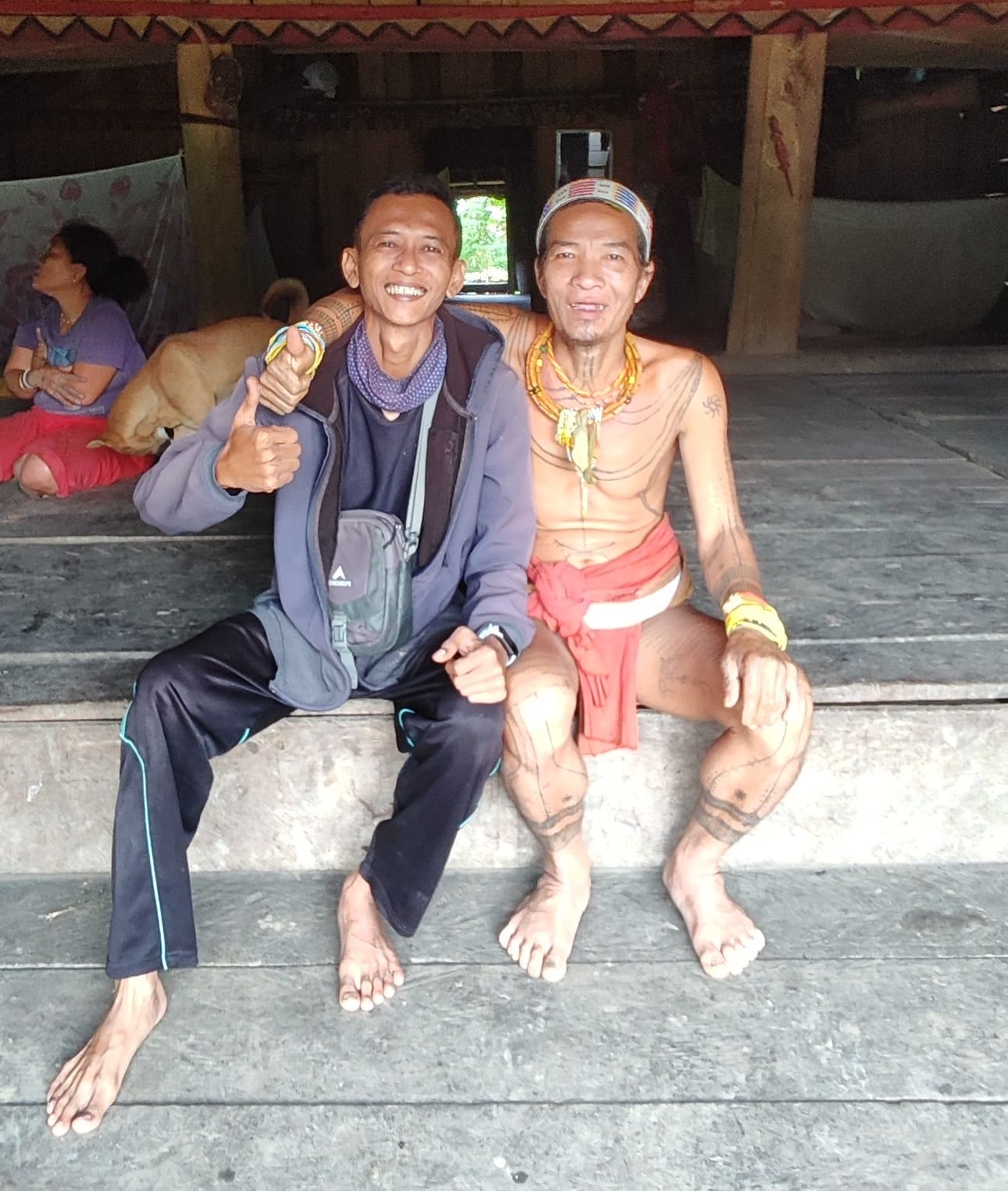 Written by Andrian Salis · Born in Muara Siberut · Founder, Pulau Asli Tour
- Ask if the guide was born and raised on Siberut Island — not just "based in Mentawai"
- Verify dual-level permits: government AND tribal chief
- Pricing should be the same year-round — seasonal markups signal an intermediary
- You should be able to speak directly with your actual guide before payment
- Solo traveler surcharges often indicate the operator is not directly community-funded
- Government institutional backing (not just a personal brand) signals accountability
I've been guiding in Mentawai for 15 years, born in Muara Siberut. In that time I've watched dozens of operators come and go — some genuine, some not. This guide is not about me. It's a framework any traveler can use to evaluate any Mentawai operator — including us. If we don't pass your checklist, don't book with us. That's how it should work.
The 17 Questions
There is a difference between a guide who grew up eating sago with a Sikerei family and a guide who took a cultural training course. The Mentawai tribe relationship is built over generations. A native guide has childhood friendships with village elders — relationships that open doors no outsider can replicate.
Ask directly: "Where were you born? How long have you lived on Siberut?" The answer should be specific, not vague.
Responsible Mentawai tribe visits require two independent layers of authorization. The government permit shows you are operating legally within Indonesian tourism law. The tribal chief permit shows the Sikerei community has given explicit consent for visitors. An operator with only one of these is cutting corners — either on legality or on community consent.
Genuine community-based operators have fixed costs: guide salary, community hosting fee, tribal permits, transport. These do not fluctuate by season. Operators who charge more during peak surf season are applying commercial logic to what should be a community relationship — they are essentially taxing the traveler for the calendar rather than for the experience.
A direct operator will connect you to the guide immediately — because the guide is the operator. An intermediary or aggregator will route you through a sales team, a generic contact form, or a third-party platform. If you cannot reach the person who will walk the jungle with you before money changes hands, that is a significant transparency gap.
A fast, always-online reply is not the same thing as a direct reply. Larger operators can afford a dedicated staff member whose only job is answering messages instantly, 24 hours a day — that speed can feel reassuring, but it usually means you are talking to customer service, not the person who will actually guide you. Ask directly: "Is this the guide I'll be with in the jungle, or a support team member?"
Beyond a business license, a credible operator has relationships with the regional DPRD (legislature) and Dinas Pariwisata (tourism office) who oversee indigenous community visits. This institutional accountability means the operator follows ethical guidelines for cultural tourism — and has real-world consequences if they do not.
Be careful to distinguish two different things here. Mentawai does have genuine customary councils (dewan adat) — real institutions that handle matters like customary land disputes and traditional law. That's separate from a specific claim that a council has reviewed and endorsed a particular tour operator's tourism practices. General customary governance existing is not the same as a documented, tourism-specific endorsement of one company. If an operator cites a council or code-of-ethics approval, ask to see it — the two claims are not interchangeable.
Transparent pricing is one of the simplest tests of operator integrity. If you cannot find the price on the website without submitting a form or emailing for a quote, the operator is either hiding a high number or adjusting prices based on your perceived budget. Genuine community operators have nothing to hide — the price is the price.
This is the ethical core of community-based tourism. When a platform or aggregator is involved, a percentage of your payment leaves the community entirely. When you book direct with a community-based operator, guides, village hosts, boat captains, and Sikerei families all receive payment directly. Ask explicitly: "What percentage of my fee goes to the local community?"
There is also a deeper version of this question worth asking: "Is the person guiding me the actual owner of this business, or an employee of a company based elsewhere?" Many operators do employ local Mentawai staff as guides — that alone is not proof of where the profit goes. If the guide works for a company owned outside Mentawai, most of your payment still leaves the community as company margin, even though a local person led your trek. A business genuinely owned by a Mentawai family keeps that margin local too.
Reaching a genuine remote Sikerei community — not a village near the port — requires travel time. A 3-day tour gets you there. A 5-day tour gives you real time. A 6 or 7-day package is where genuine immersion happens: participation in rituals, forest treks for medicinal plants, real daily life. Operators capped at 5 days are often working from a standard itinerary that does not go deep enough to offer this.
A solo surcharge of 10–15% is understandable: some costs are fixed regardless of group size. A solo surcharge of 30–50% — or a mandatory minimum spend — signals that the operator's cost model is based on group turnover, not individual care. Community-based operators tend to absorb solo pricing because the community hosting fee is fixed regardless of how many people sleep in the longhouse.
Any operator with genuine relationships can do this — because past guests become friends. Authentic operators often stay in contact with the people they have guided for years. If an operator hesitates or says "all our reviews are on [platform]," they may not have the kind of personal connection that survives after checkout.
A remote multi-day trip involves several transport legs — ferry, boat, sometimes overland — and each one needs to be booked and confirmed ahead of time. An operator who is still figuring out boat availability after you've already arrived in Padang or Siberut is not properly prepared, and that unpreparedness becomes your problem mid-trip: missed connections, wasted travel days, unnecessary stress.
Ask directly: "Can you tell me the exact departure time and transport plan for every day of the trip, before I book?"
Remote community forests are not set up to feed a group of visitors for several days on demand — a responsible operator brings in a planned base food supply for the full length of the trip, with local food treated as a cultural bonus rather than the primary source. Running short of food partway through a multi-day trip is a real, entirely avoidable risk if the operator hasn't planned properly.
Ask directly: "What food do you bring for the full length of the trip, and what happens if supplies run low?"
This is one of the most concrete questions you can ask, and the answer varies enormously between operators. Some publish a specific percentage — commonly somewhere in the 25–40% range once guide wages, permits, transport, and company overhead are subtracted. A genuinely direct, family-owned operator with no outside company structure can reach 100%, because there is no separate business layer taking a margin before the community is paid.
Ask directly: "Is that a stated percentage, or is it 100% direct with no company margin taken out first?" A specific percentage under 100% isn't necessarily dishonest — but it does mean a portion of your payment is covering something other than the community itself. It's worth reading a published percentage from both directions: an operator advertising "25–40% to the community" is also, by the same sentence, disclosing that 60–75% does not reach the community — it stays with the company, mainland staff, or overhead instead. Neither direction is automatically good or bad, but the second framing is the one most marketing pages don't spell out for you. It's also worth asking how long that arrangement has been in place — a revenue-sharing practice that's been consistent for years signals something different than one introduced only recently, once competition or public attention made transparency worth advertising.
One early signal worth noticing before you even ask this question directly: if a price is dramatically lower than every other operator offering a similar multi-day itinerary, it's worth asking yourself why. A thin margin has to come from somewhere — sometimes it's genuine efficiency, but sometimes it's local guides and host families being paid less, or corners cut on the kind of trip planning covered in the food-logistics question above. A lower price isn't automatically a problem, but it's a reasonable prompt to ask both questions more carefully, not less.
Media logos and press mentions ("as featured in...") are common trust signals on tour operator websites, and many are genuine. But a mention is only as useful as your ability to check it — a credible operator can point you to the actual article, segment, or broadcast, not just a name-drop with no link.
Ask directly: "Can you send me a link to that feature?" A genuine mention takes seconds to produce.
Base package prices are usually easy to find. What's harder to check in advance is the cost of everything that isn't automatically included — a traditional tattoo, a dance ceremony, airport pickup, board rental. Some operators list these clearly alongside the main price; others only reveal them once you're already mid-conversation, or worse, once you've already arrived.
Ask directly: "Can you point me to a page that lists every add-on and its price, not just the base package?" A genuine operator can answer in one link.
Not necessarily — and this is worth separating clearly before you book. Fluency in the Mentawai language and a real understanding of the culture can be earned by anyone who has spent years working in the region. That's a genuine skill, but on its own it isn't proof of ethnic origin, any more than speaking fluent Spanish makes someone Spanish.
The concrete way to check is to ask for something language skill alone can't fake: a Mentawai person can immediately name their suku (clan) and confirm where they were born and raised. Ask directly: "What is your suku, and did you grow up on the island?"
Some guides, trying to entertain guests, teach visitors a "local phrase" as a joke — in Indonesian, English, or another language — without explaining that it's actually a crude or offensive word. The guest often repeats it later, sometimes in front of other local people who understand exactly what was said, with no idea anything was wrong.
This matters for two reasons: it can genuinely offend the wider local community, and it puts the guest in an embarrassing position they never agreed to. Ask directly: "If you teach me a phrase, will you always tell me exactly what it means?"
How Pulau Asli Tour Answers These 17 Questions
For independent context on indigenous cultural tourism ethics, see the UNESCO framework for cultural heritage tourism.
Frequently Asked Questions
Pulau Asli Tour Passes All 10 Checks
3rd-generation Siberut native. Dual permits. Year-round pricing. Direct booking. 25 Google reviews, 4.9★. Ask us anything before you commit.
Chat Andrian to Book See All Tribe Tour Packages