The Minangkabau Footprint in Mentawai
A 4-Generation Family Legacy: How Islamic and Minangkabau roots became part of Muara Siberut's identity
A Debate Answered by Time
Every time the debate about Mentawai and Minangkabau identity heats up on social media, I just take a deep breath. In our home in Muara Siberut, that debate has already been answered by four generations of footsteps, by customs still practiced, and by a simple reality: we never left.
This presence occurred long before Indonesia's independence, and its continuity can still be witnessed today. This note is not to claim or negate. It is documentation of a slice of history that still breathes, still pulses, and can still be touched in Mentawai today. A story of how a family became part of an island.
The Sea, Time, and an Unending Decision
Our existence began with a decisive sea journey, long before Indonesia's independence. Our grandfather came to Mentawai during the Dutch colonial era as a nurse.
At that time, the journey from Padang to Mentawai was not short. No speedboats, no modern engines. The journey took up to a full month by sailboat. Our grandmother kept and passed on that story to us. From her lips, we heard a sentence we never forgot: "When the beach is visible, it means our journey is still about a week away." A simple sentence describing how far that decision reached—not just distance over the sea, but distance from one life to a new one.
Behind the decision to settle, there is a dimension inseparable from the Minangkabau soul: Islam. For the Minang people, merantau (migration) is not just about making a living—it is a journey framed by Islamic values. "Adat basandi syarak, syarak basandi Kitabullah" (Custom is based on religious law, religious law is based on the Quran) is not just a slogan, but the compass our grandfather carried across the ocean. When he chose to settle, he didn't just bring himself, but also brought the Islamic identity that took root in Muara Siberut.
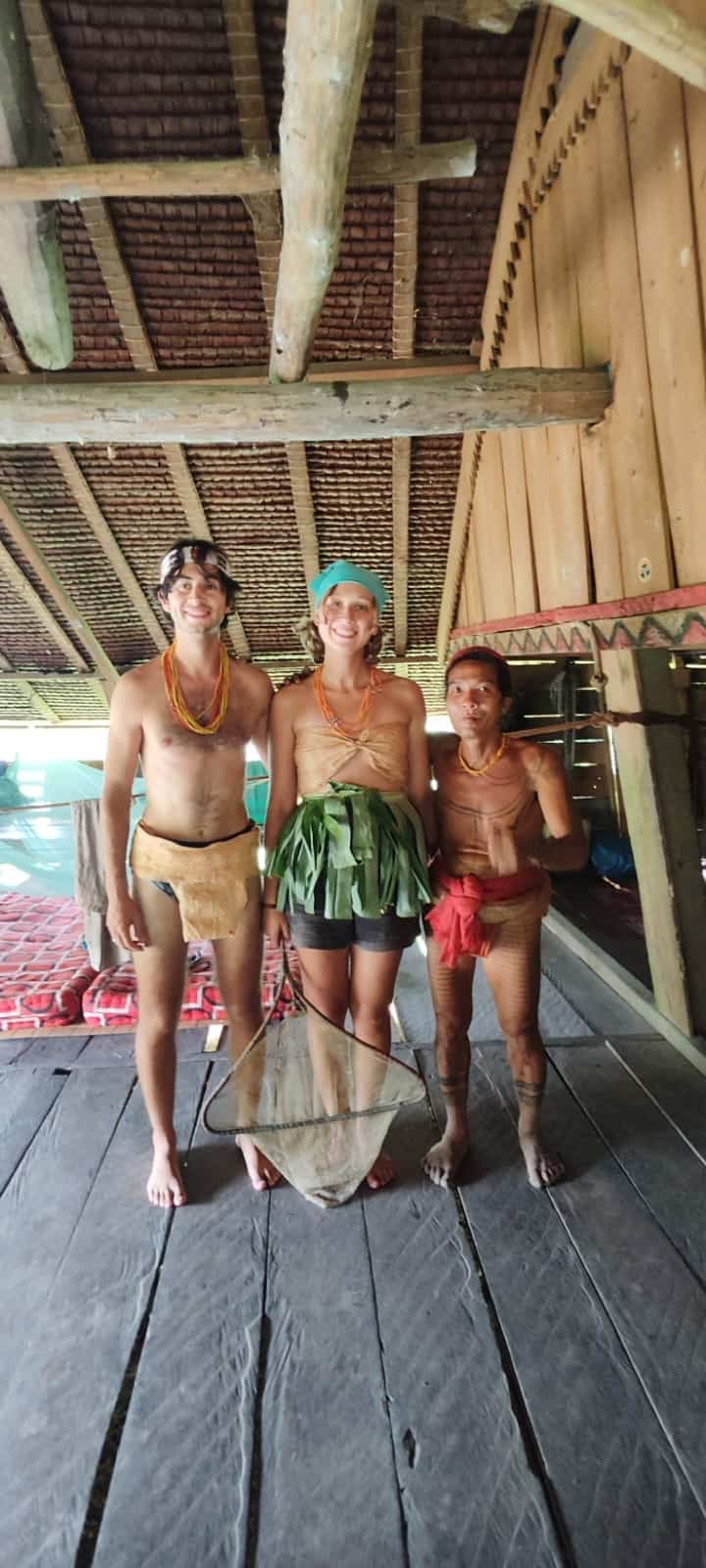
Four Generations: From Roots to Fruitful Branches
This continuity is what separates us from the status of "newcomers". This is the unbroken chronology of life:
- First Generation (Grandfather): The pioneer. Arrived as a nurse during the colonial era, and after Indonesia's independence, he transitioned into a trader—buying local commodities like manau rattan and agarwood. He settled, built a family, and became part of Muara Siberut.
- Second Generation (Father): Born and raised entirely in Muara Siberut. He built a life buying typical Mentawai commodities: manau rattan, agarwood, and patchouli, while also working as a contractor. His life depended on and gave life to the economic pulse of Siberut, building deep networks of trust with the community.
- Third Generation (Andrian Salis, born 1989 in Muara Siberut): I continued that footprint as a buyer of manau rattan and a contractor, experiencing firsthand the dynamics of this island's development. Unlike my father and grandfather, I do not trade agarwood, but I focus on manau and construction. However, there was another calling: to care for and share the story of Mentawai. Thus, I run Pulau Asli Tour, an effort to document and introduce the authenticity of Mentawai—including the long history hidden within it.
- Fourth Generation (Our children): They were born, go to school, and play on the same land. For them, Mentawai is their only home.
Four generations living consecutively in the same place. In a social context, this is no longer "newcomers", but part of Mentawai itself. As documented in the historical records of Muara Siberut, our family is part of the Minangkabau community that has shaped the gateway village to Siberut Island.
A Broader Family Legacy Across Mentawai
What I have shared here is only a glimpse of our family's story. Our extended family is vast, and many members have played significant roles in shaping Mentawai's social, economic, and cultural landscape over the decades. Some have served in local governance, others in education, healthcare, and community leadership. Their contributions are woven into the fabric of Mentawai's development, though their individual stories deserve their own chapters.
This article focuses on the direct lineage that led to Pulau Asli Tour, but it is important to acknowledge that our family's presence in Mentawai extends far beyond what is documented here. We are part of a larger mosaic of Minangkabau-Mentawai families who have called this islands home for generations, each contributing in their own way to the community's well-being and cultural preservation.
Living Customs, Rooted Islam, and Real Social Roles
In our extended family, Minangkabau customary practices are still lived contextually. One of them is the Kerapatan Niniak Mamak (the assembly of elders), which still functions today, especially in managing marriages and deaths. This practice does not replace, but coexists with Mentawai customs, showing how identity can be layered and mutually respectful.
This living custom cannot be separated from the Islam that has also taken root. The Siberut Grand Mosque (Masjid Raya Siberut) in Muara Siberut is tangible proof—a mosque that stood even before I was born, becoming the spiritual center of the Muslim community in Siberut and marking Muara Siberut as the heart of Islam in the Mentawai Islands. Here, the Minang people and Mentawai Muslims meet in one qibla, one congregation.
Throughout our family's history, there have been members who dedicated their lives to Islamic education, founding schools and institutions that have educated generations of Mentawai Muslims. Their legacy is not just in buildings, but in the values passed down through decades of service to the community.
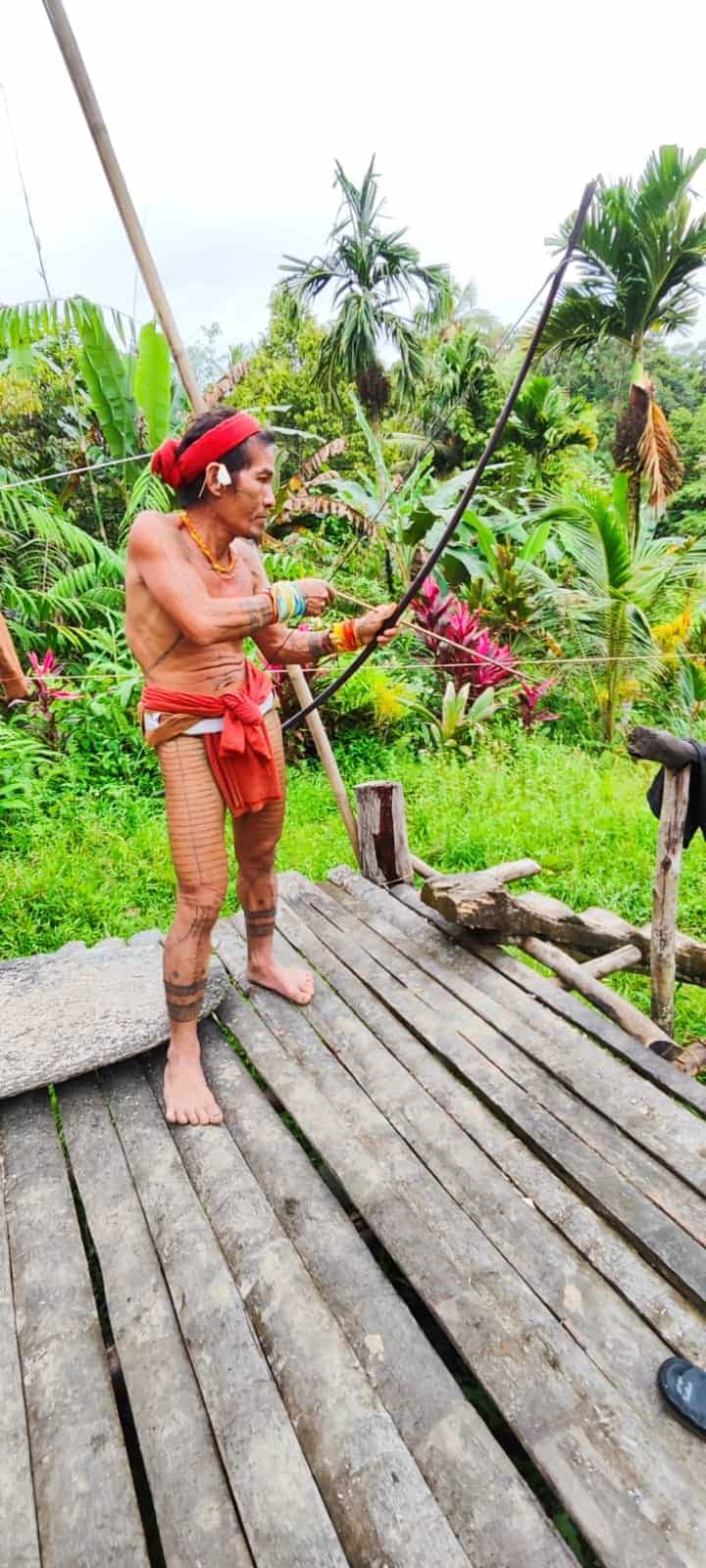
A Dynasty of Builders: From Healthcare to Sustainable Tourism
We are not merely settlers who relocated from Padang. We are a family dynasty that has actively built Mentawai across generations, contributing to the community's well-being in every possible sector.
It began with healthcare, as our grandfather arrived to serve as a nurse. It grew through trade and local enterprise, as my father and I built businesses around manau rattan and construction, keeping the local economy moving. It extended to education and faith through family members who founded schools and dedicated their lives to Islamic education.
Today, this legacy of service continues in the political and tourism sectors. Our family maintains close relationships with local government leaders who share our vision for sustainable development on the island. Furthermore, my current role in tourism through Pulau Asli Tour is the natural continuation of this legacy. I am proud to state that our community-based tourism initiatives receive direct support and alignment from local government partners, including the Mentawai Islands Regency DPRD (Commission 3: Infrastructure, Environment, and Tourism), who share the same vision: empowering the local Mentawai community through authentic, responsible, and sustainable tourism.
This progression is tangible proof that our family has consistently helped the Mentawai society. This involvement is not about power, but a sign that our presence is accepted, trusted, and actively shaping a better future for the island. And we are not alone; dozens of other families share similar footprints, forming a broad social mosaic that has long been part of the Mentawai landscape.
An Identity That Is Not Opposed
We are part of Mentawai. Born in Mentawai, raised in Mentawai, and to this day still active in social life in Mentawai.
At the same time, we also carry the Minangkabau identity as a family heritage. These two things do not negate each other. In daily practice, they actually coexist with mutual respect.
This identity is also reflected in the simplest daily matters: food. Muara Siberut, as an area with a Muslim majority, is a place where halal food is not something you have to search far and wide for. Stalls, markets, and daily life move in a natural and reasonable halal awareness—a comfort created because Islam has long been part of the social ecosystem here, not something that came later.
It should be noted that the Minangkabau people have been present in Mentawai long before Indonesia's independence, and this presence can still be proven today through family, customary structures, socio-political involvement, and tangible Islamic roots.
Why This Note Was Archived at Pulau Asli Tour?
We are part of Mentawai. We also carry the Minangkabau heritage. These two things, in our lives, have never conflicted.
This note is a family heritage intentionally documented and shared on the internet—as concrete proof that we still exist, are still here, and are still part of Mentawai today.
This note was intentionally archived through Pulau Asli Tour because we believe Mentawai is not just an exotic destination. It is a living space full of history, people, and complex stories. Every time we guide tourists, we don't just show the beauty of nature, but also tell the stories of the people within it—including long stories like this that shape the figure of Mentawai island today.
This is a small effort to preserve collective memory. History often lives not in textbooks, but in grandmother's stories, in a one-month voyage, in the call to prayer echoing from the Siberut Grand Mosque, and in the choices of generations to stay, contribute, and love the land that received them.
This is not a claim, but a note. A note that the Minangkabau came, settled, multiplied, and today live as part of Mentawai—bringing with them an Islam that has now become part of Siberut's pulse.
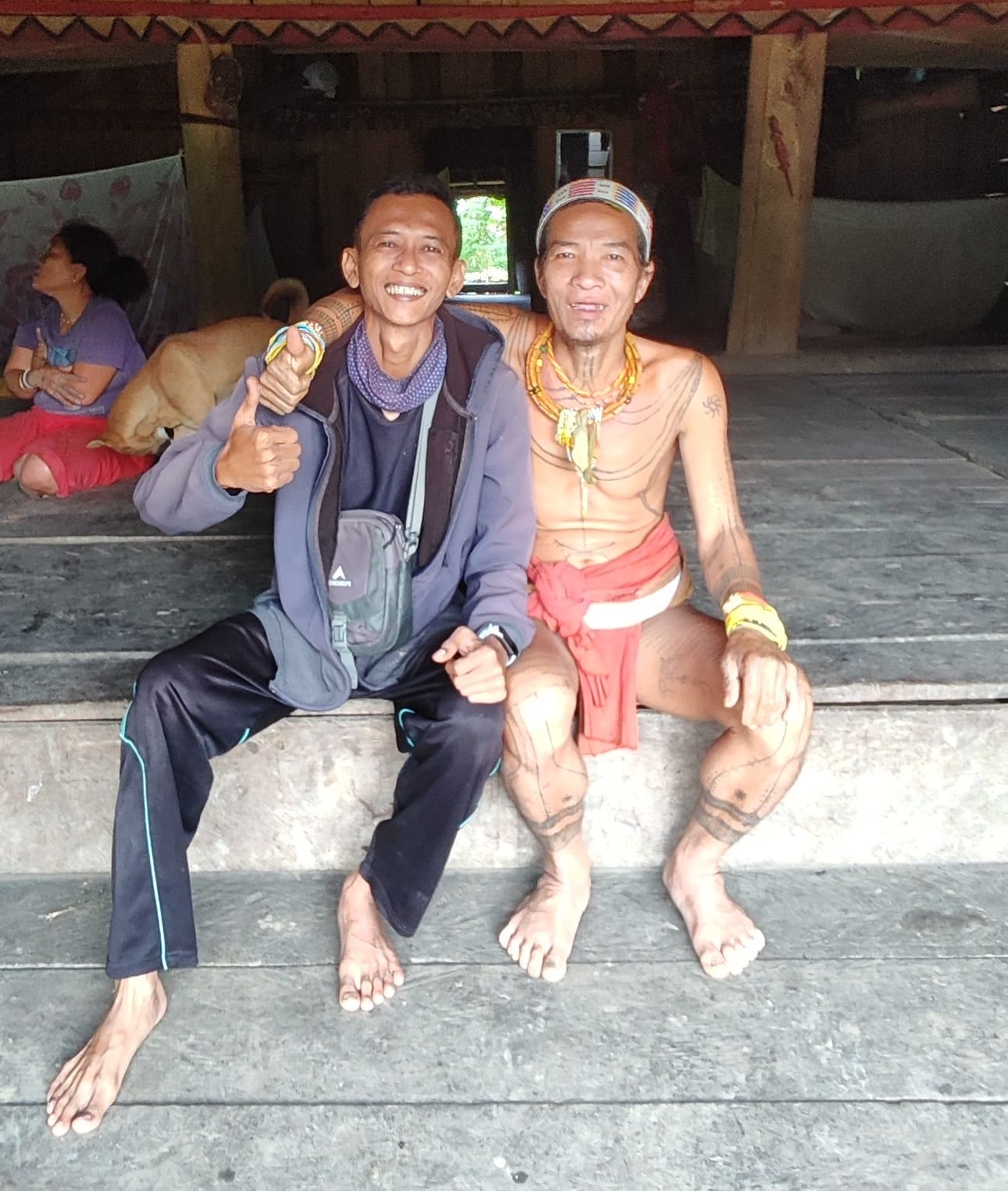
Frequently Asked Questions
Is Pulau Asli Tour owned by Minangkabau or Mentawai people?
Pulau Asli Tour is led by 3rd-generation founder Andrian Salis, continuing a 4-generation family legacy in Mentawai. Our family is of Minangkabau ethnic descent, but we were born, raised, and have lived consecutively in Muara Siberut for over a century. We understand and speak the Mentawai language naturally, and our extended family includes members married to native Mentawai individuals.
What is the relationship between Minangkabau and Mentawai cultures?
The Minangkabau people have been present in Mentawai since the Dutch colonial era, primarily as traders, healthcare workers, and educators. In Muara Siberut, Minangkabau customs coexist respectfully with Mentawai traditions. Our family practices both Minangkabau adat (customary law) and respects Mentawai cultural boundaries, creating a unique cultural bridge.
How many generations has your family lived in Mentawai?
Four consecutive generations. Our grandfather arrived as a nurse in the Dutch colonial era, our father was born in Muara Siberut, our founder Andrian Salis was born there in 1989, and the fourth generation continues to grow up on the island. This unbroken continuity makes us part of Mentawai's social fabric, not newcomers.
Does Pulau Asli Tour have government support?
Yes. Our community-based tourism initiatives receive direct support and alignment from local government leaders, including the Mentawai Islands Regency DPRD (Commission 3: Infrastructure, Environment, and Tourism). We operate with a Dual-Permit System: government authorization AND tribal chief approval.
Can I experience both Minangkabau and Mentawai culture on one trip?
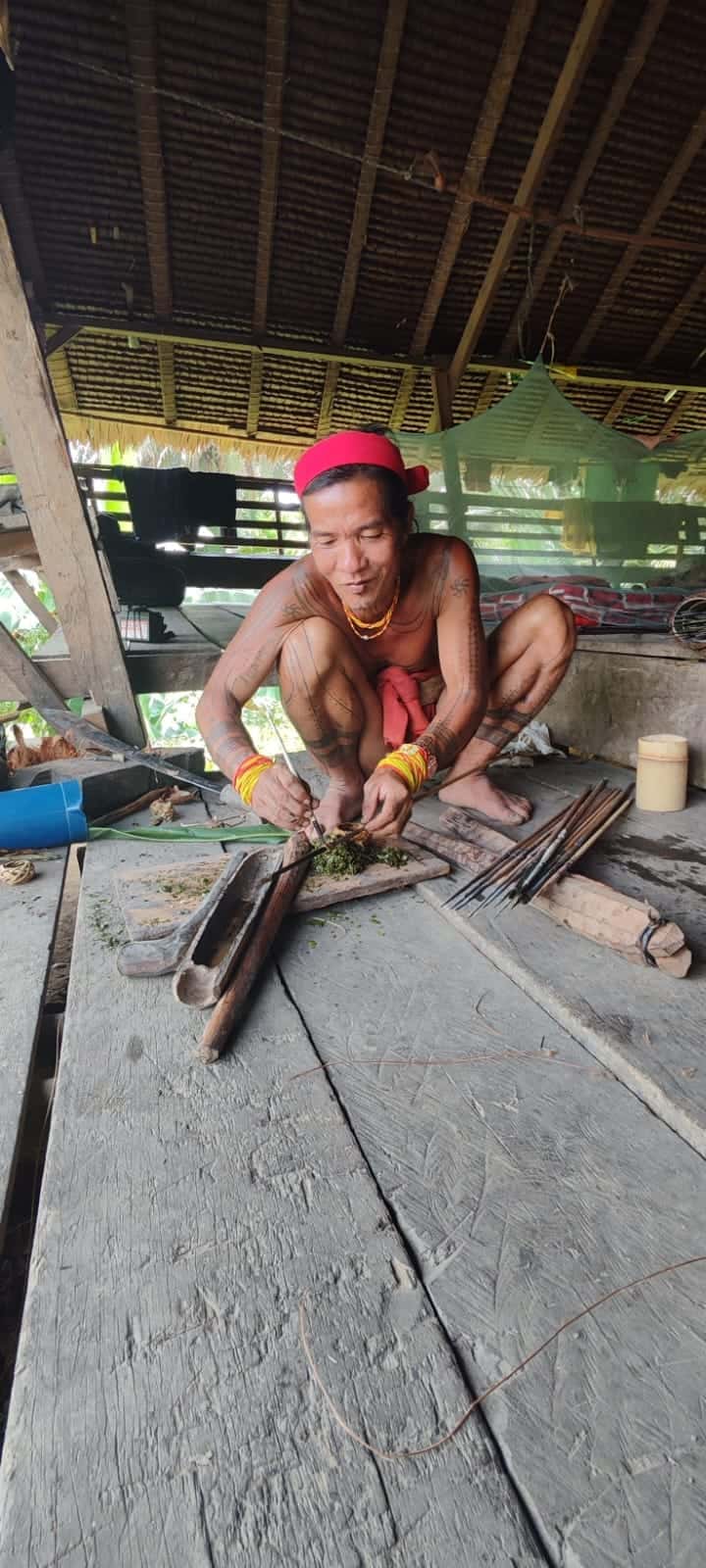
Yes. When you book a tribe tour with Pulau Asli Tour, you experience authentic Mentawai tribal immersion (living with Sikerei shamans in UMA longhouses) while also learning about the Minangkabau-Mentawai historical connection. Our founder Andrian Salis bridges these cultural layers, offering a unique perspective on how these identities coexist in Siberut.
Cultural Heritage Gallery
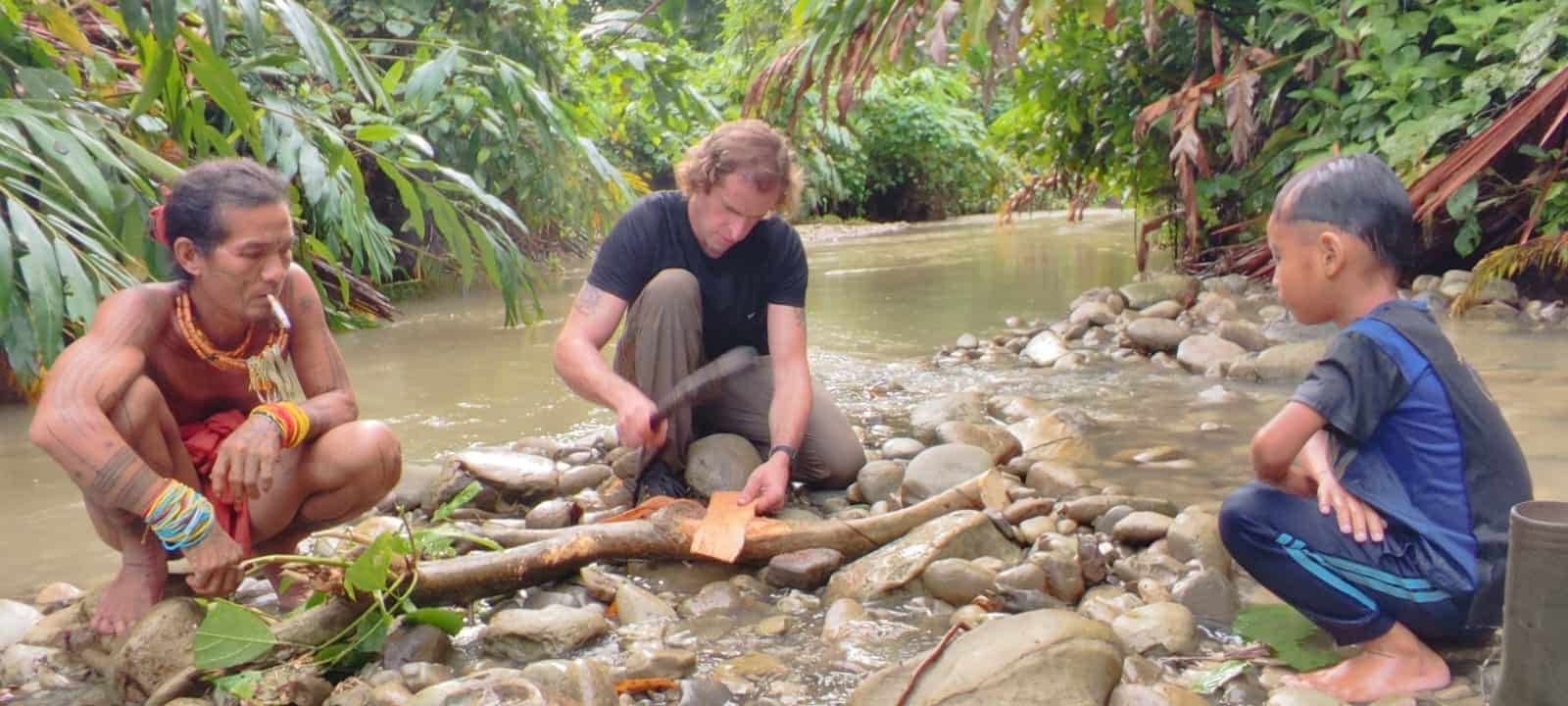
Experience Mentawai History Directly
Book a tribe tour and explore these cultural layers with a guide who lives them. Community-based tours — 3 to 7 days. Every dollar goes to the local community.
✓ Chat Andrian to Book