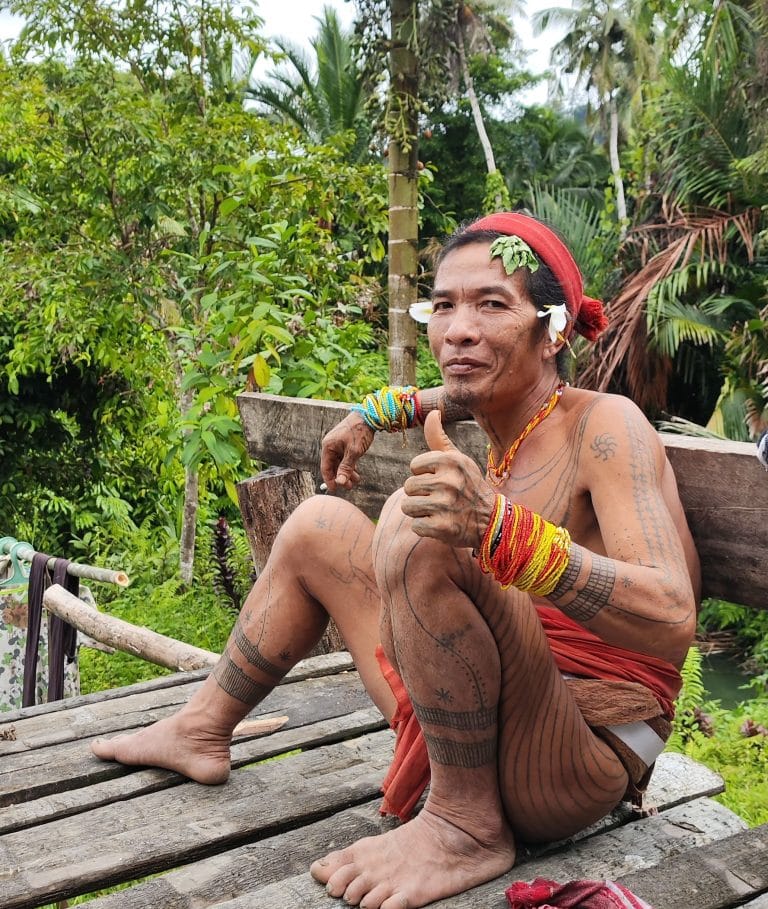
Definition: The Mentawai People
The Mentawai are an indigenous people living on the Mentawai Islands — an archipelago of four main islands (Siberut, Sipora, North Pagai, South Pagai) off the western coast of Sumatra, Indonesia. They are one of the oldest surviving indigenous cultures in Southeast Asia, with a population of approximately 64,000.
Geographic Context
Mentawai Archipelago has 4 main islands: Siberut (largest), Sipora, North Pagai (Pagai Utara), and South Pagai (Pagai Selatan). Authentic Mentawai tribe culture — Sikerei shamans, UMA longhouses, traditional ceremonies — exists only on Siberut Island. All Pulau Asli Tour tribe experiences take place on Siberut.
The Mentawai have lived in isolation from mainland Sumatra for nearly 500,000 years — far longer than any deliberate human cultural separation. This isolation produced a language, belief system, and way of life found nowhere else on Earth.
History and Origins
The Mentawai people are believed to be descendants of pre-Austronesian populations who migrated to the islands before the era of widespread sea trade. Unlike most of Indonesia, the Mentawai Islands were largely bypassed by the Hindu-Buddhist cultural waves that swept the archipelago from the 5th century onward, and by Islam, which arrived in most of Sumatra from the 13th century.
This isolation preserved a Neolithic-era way of life that anthropologists describe as one of the most intact examples of pre-modern subsistence culture in Asia. The Mentawai have no written language — all knowledge, from forest medicine to spiritual practice, is transmitted orally across generations.
The colonial Dutch presence in the 18th and 19th centuries brought missionaries and limited trade contact, but the geographic remoteness of Siberut in particular limited the depth of this influence.
Spiritual Beliefs: Animism and Arat Sabulungan
The Mentawai worldview is animist — every element of the natural world, from large trees to rivers to weather, is inhabited by a spirit (sanitu). The belief system is called Arat Sabulungan, which roughly translates as "the religion of leaves."
Under this system, illness is understood as a disruption in the relationship between a person's soul and the spirit world. Healing requires restoring this balance — a task performed by the Sikerei (shaman). The Sikerei communicates with spirits through trance, song, and ritual, and prescribes both physical remedies (from forest plants) and spiritual ones (through ceremony).
Tattoos (titi) are a permanent record of spiritual status and identity. They are applied using traditional methods — thorns attached to a bamboo or wooden handle — and the design reflects the wearer's spiritual journey and role in the community.
Traditional Practices
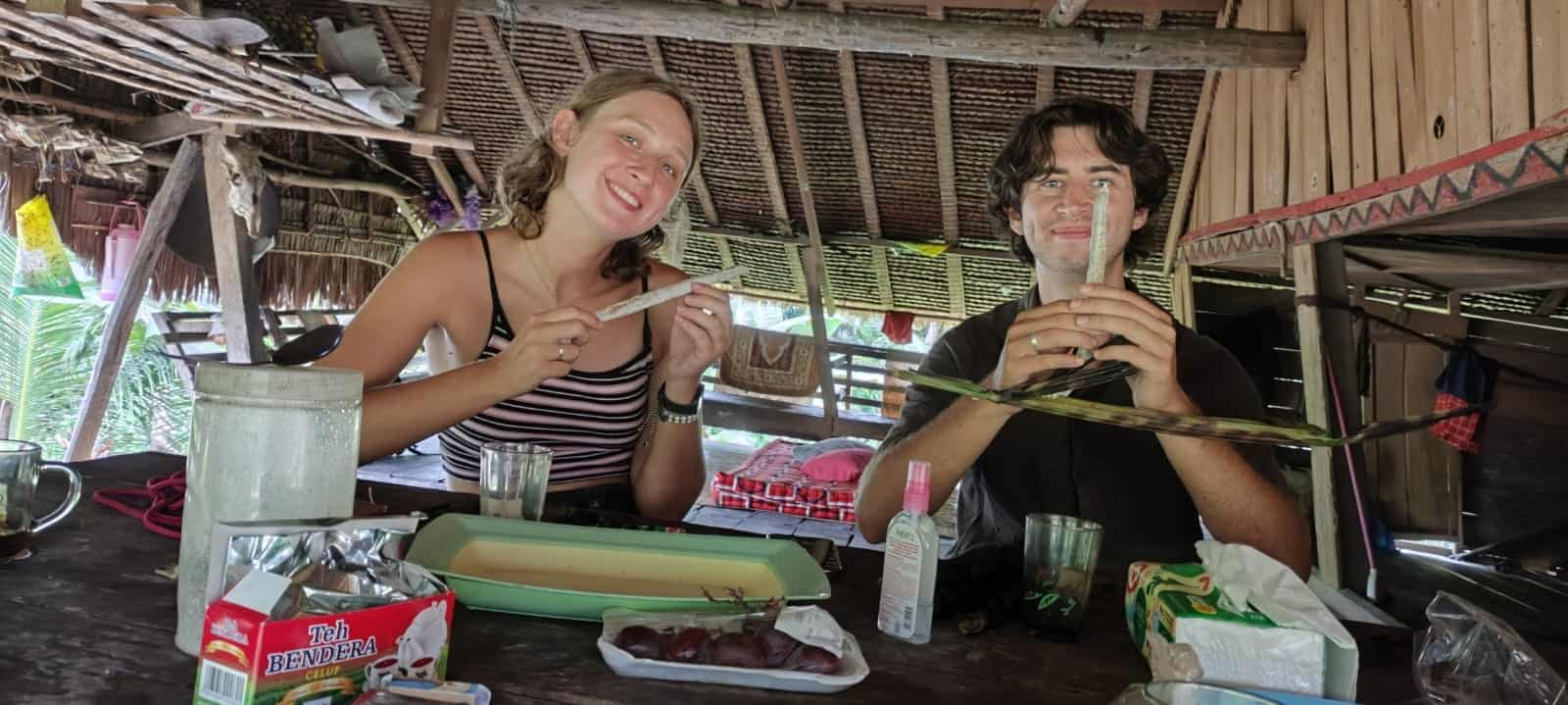
Food: The primary staple is sago, processed from the sago palm by felling, extracting pith, washing, pressing into flour, and cooking. Protein sources include sago grubs (larvae found in decaying palms), river fish, and hunted game using poison arrows prepared with plant-based poison.
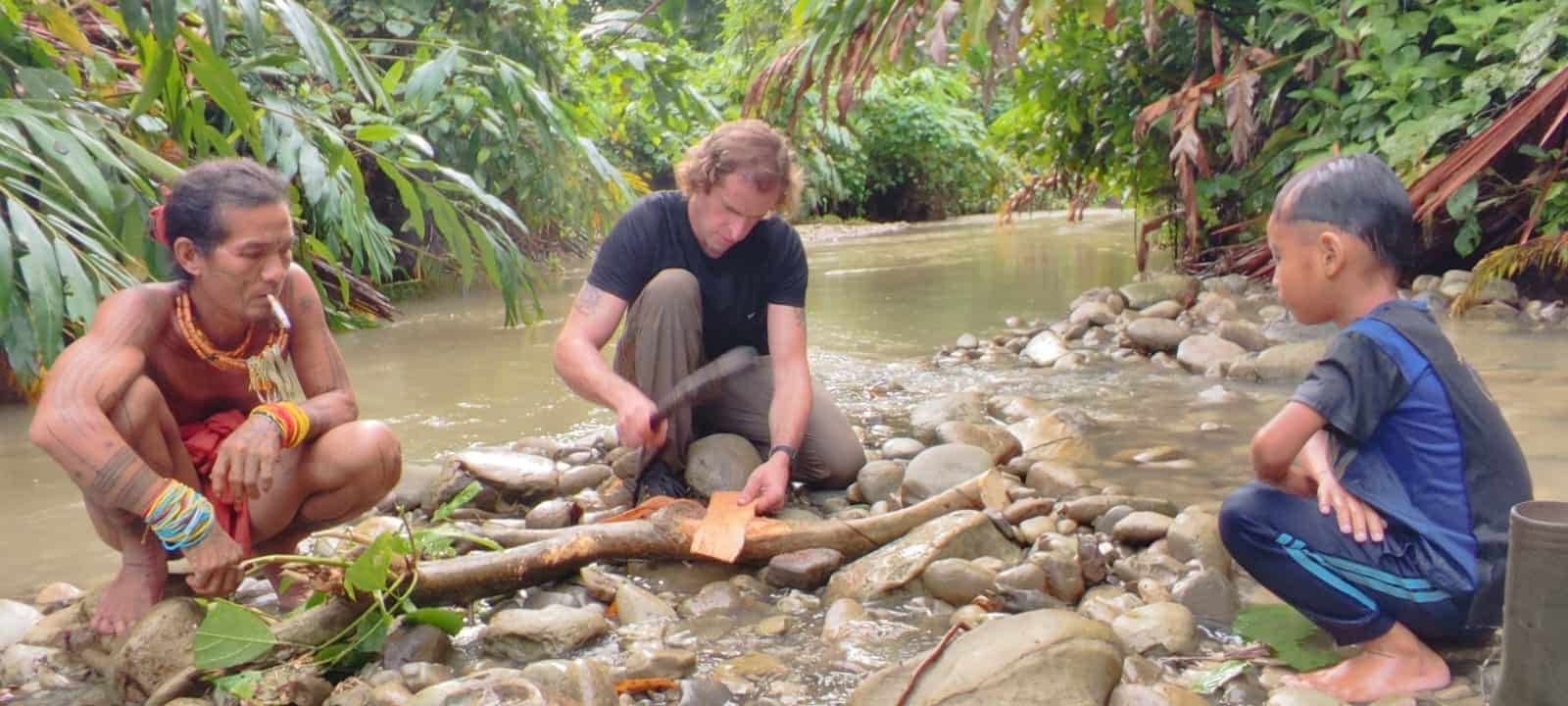
Clothing: Traditional Mentawai clothing is made entirely from bark cloth (kabit) — harvested from specific tree species, softened by soaking, and beaten into a flexible, wearable material. Both men and women wear bark cloth in various styles for different contexts.
Accessories: Colorful glass bead jewelry (manik-manik) — worn as necklaces, bracelets, and ornaments alongside bark cloth — has been part of everyday Mentawai dress for generations, even though the beads themselves have never been produced on the islands. They arrive through a trade relationship that, in guide Andrian Salis's own family, goes back three generations: his grandfather first bought beads in Padang and brought them to Mentawai to sell, his father continued the same trade, and the same beads remain in everyday use across the islands today — one small, lasting thread connecting Mentawai material culture to the mainland trade routes that continue to supply it.
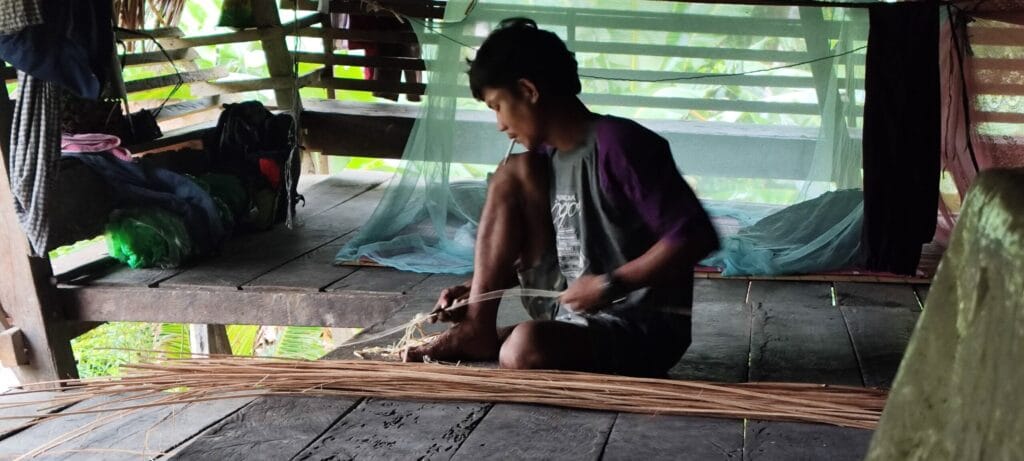
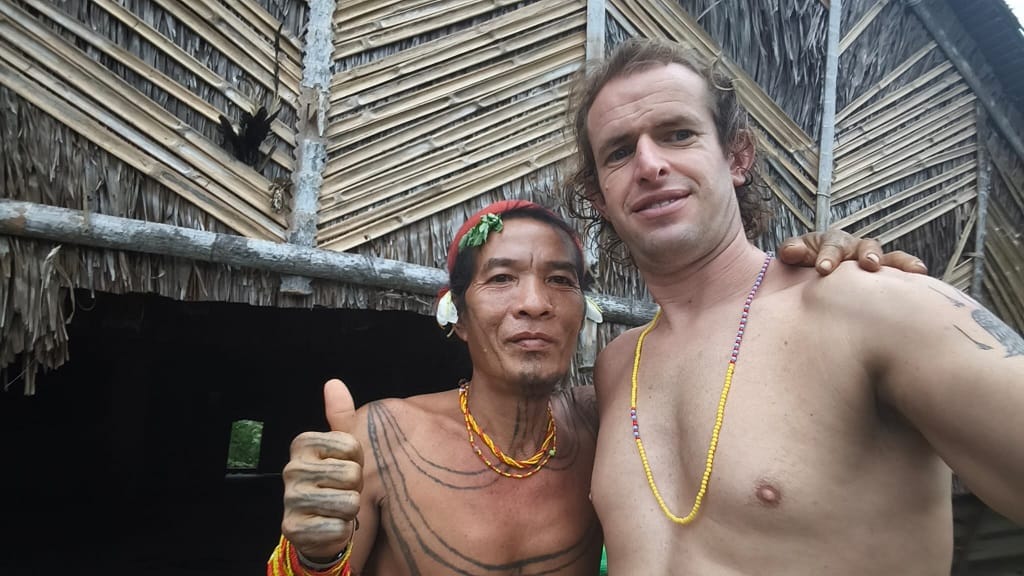
Housing: The UMA is the traditional Mentawai longhouse — a large wooden structure on stilts shared by an extended family group of 5–30 people. The UMA is the center of community life: sleeping, cooking, ceremonies, and daily decision-making all occur here.
Hunting: Poison arrows are the primary hunting tool of the Mentawai. Arrow poison is prepared from forest plants — a specialized knowledge held by experienced hunters and Sikerei. Traditional traps and fishing using natural materials are also widely practiced.
Modern Life and Tourism
Today, the Mentawai people live in a complex interface between traditional practice and the modern Indonesian state. Some communities maintain near-complete traditional lifestyles; others have adopted Christianity or Islam and modified traditional practices accordingly.
The community forests of Siberut Island — directly bordering the 403,000-hectare Siberut National Park (UNESCO Biosphere Reserve) — are where authentic tribal community life is most intact and accessible to respectful visitors.
Responsible tourism, when conducted with proper government and community permits and economic benefit flowing directly to host families, supports cultural preservation by creating economic value in maintaining traditional practices rather than abandoning them for urban wage labor.
Pulau Asli Tour operates exclusively with permits at both government level and tribal chief level. Andrian Salis, a Mentawai cultural guide born on Siberut Island, speaks Mentawai fluently — ensuring genuine access rather than surface-level cultural display. View tribe tour packages →
Common Questions About Mentawai Tribe Culture
Experience Mentawai Culture Directly
Small group. No middleman. Led by a 3rd-generation Mentawai veteran raising the 4th generation on Siberut.