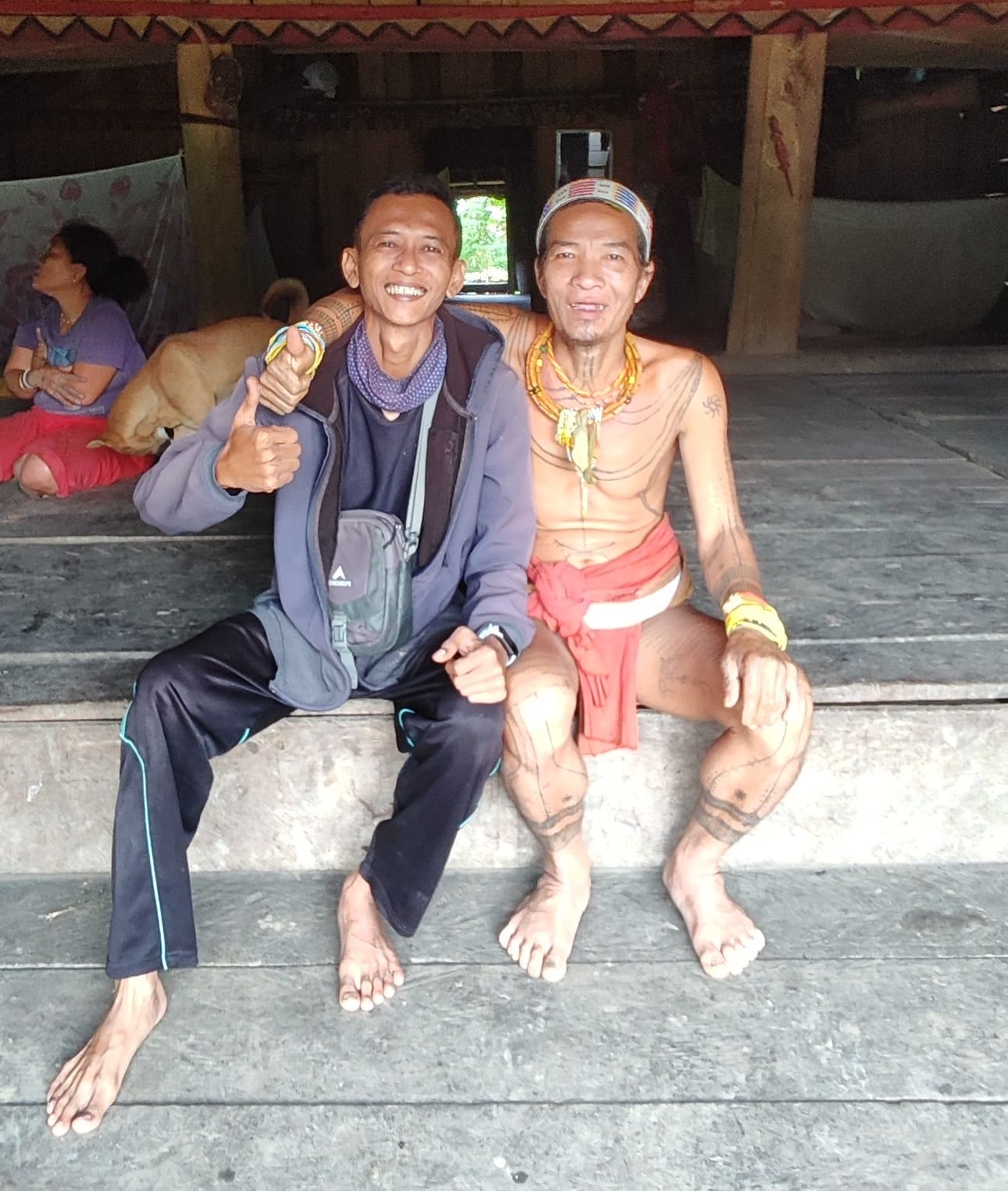

Mentawai Islands Wildlife: 4 Endemic Primates Found Nowhere Else on Earth
The Mentawai Islands — specifically Siberut Island — host one of the most extraordinary concentrations of endemic wildlife in Southeast Asia. Four primate species live here and nowhere else on Earth. The 403,000-hectare Siberut National Park, a UNESCO Biosphere Reserve, protects the last significant tracts of lowland tropical rainforest where these animals survive. If you are planning a Mentawai tribe tour, this guide tells you exactly what wildlife you may encounter and how to maximize your chances of seeing it. You walk the same forest while living with the Mentawai tribe; wildlife sightings are never guaranteed.
I am Andrian Salis, born and raised on Siberut Island, founder of Pulau Asli Tour. I have walked these forests since childhood. The wildlife here is genuine, the forest is intact, and the experience of hearing Kloss gibbons call at dawn is something that stays with visitors for a lifetime.
The 4 Endemic Primates of Mentawai
Mentawai's four endemic primates evolved in isolation over millions of years after the islands separated from mainland Sumatra. All four are listed on the IUCN Red List as Endangered or Critically Endangered.
1. Kloss Gibbon (Hylobates klossii)
Known locally as bilou, the Kloss gibbon is Siberut's most iconic primate. Its haunting dawn song — a series of rising and falling calls — echoes through the canopy at sunrise and can be heard from over a kilometre away. Entirely black-furred, the Kloss gibbon mates for life and lives in small family groups. It is classified as Endangered, with Siberut Island containing the majority of the global population. Sighting probability: High on deep forest treks (heard almost daily, seen frequently at 6–8am).
2. Mentawai Macaque (Macaca siberu)
The Mentawai macaque is the island's most frequently seen primate. It is bolder than the other endemic species and often found near forest edges, rivers, and occasionally village borders. Groups of 10–30 individuals are common. Known locally as joja, it is classified as Endangered. Sighting probability: High — often seen near river trails and forest camp areas.
3. Mentawai Langur (Presbytis potenziani)
Also called the Mentawai leaf monkey or joja simakobu locally, this striking primate has a black-and-white coat and a distinctive crest. It feeds almost exclusively on leaves and is more elusive than the macaque. Classified as Endangered, it prefers the forest interior and mid-canopy. Sighting probability: Moderate — requires quiet movement on forest trails.
4. Pig-tailed Snub-nosed Monkey (Simias concolor)
The most endangered of the four, classified as Critically Endangered. This slow-moving, quiet primate lives in small groups in lowland primary forest. Known locally as simakobu, it is particularly vulnerable to habitat loss. Sighting probability: Low to moderate — requires dedicated deep forest trek with experienced guide.
Siberut National Park: Why It Matters
Siberut National Park covers 403,000 hectares — roughly 60% of Siberut Island's total area. Established in 1993 and designated a UNESCO Biosphere Reserve, it protects the last extensive lowland rainforest on the Mentawai Islands. The park is directly bordering the 403,000-hectare Siberut National Park where our tribe tour routes operate.
The forest here is among the most biodiverse in the world, with an exceptionally high rate of endemism — species found in Siberut and nowhere else. Beyond the four endemic primates, the park supports:
- Over 130 bird species, including three endemic birds
- Mentawai flying squirrel (Iomys sipora)
- Mentawai rat (Rattus mentawi) — endemic rodent
- Multiple hornbill species, including the Oriental pied hornbill
- White-bellied sea eagle and Brahminy kite above coastal forest
- Monitor lizards, water monitors, and reticulated pythons
- Freshwater fish in forest rivers and streams
For academic detail on Siberut's biodiversity, see the UNESCO Biosphere Reserve documentation on Siberut.
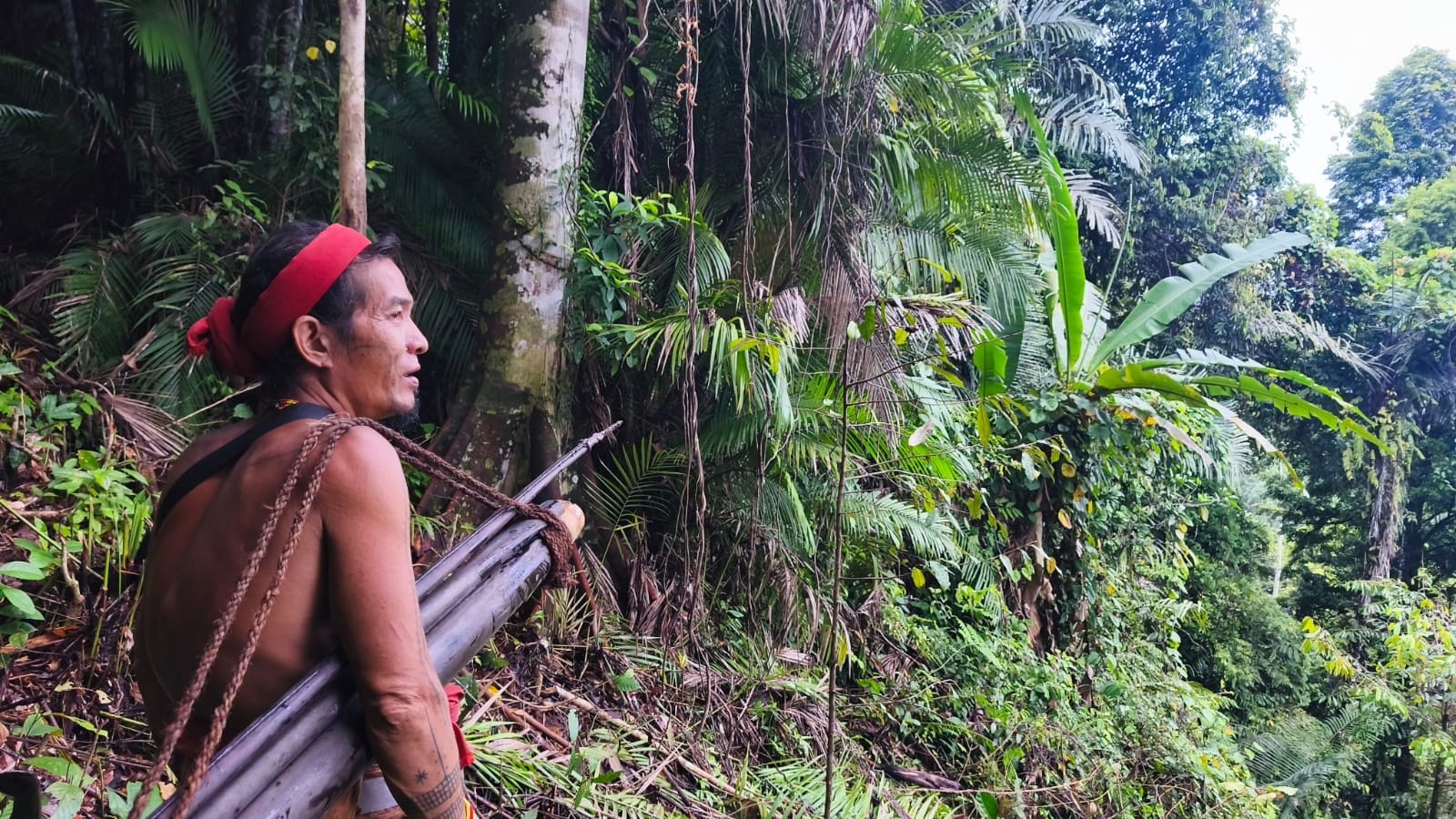
How to See Wildlife During Your Trip
Wildlife sighting in Mentawai is not guaranteed on standard tribe tours — the forest is vast and animals move unpredictably. However, with an experienced Siberut guide and proper timing, the chances are very good.
| Method | Best For | Probability |
|---|---|---|
| Dawn trek (6–8am) | Kloss gibbon (hearing + sighting) | High |
| River trail walk | Mentawai macaque, birds | High |
| Deep forest trek (add-on) | All 4 endemic primates | Moderate–High |
| Longhouse area at dusk | Macaque, flying squirrel, bats | Moderate |
| Reef snorkeling | Reef fish, sea turtles | High |
Key tips for wildlife sighting in Siberut:
- Move slowly and quietly — noise is the primary reason wildlife retreats
- Wear dark or earth-toned clothing, not bright colours
- Early morning (before 8am) is significantly more productive than afternoon
- Stay alert on river crossings — macaques often drink at river banks
- Ask your guide to stop at ridgelines — gibbons prefer ridge-top canopy
- Bring binoculars — most primate sightings are in the upper canopy
The Deep Forest Wildlife Trek Add-On
The deep forest trek is available as a paid add-on on 5-day, 6-day, and 7-day tribe tour packages. It takes you into primary forest beyond the village zone — areas where wildlife density is highest and human activity is minimal.
Deep Forest Trek — What's Included
- Experienced Siberut local guide with wildlife tracking knowledge
- Pre-dawn departure (4:30–5am) to reach forest before gibbon calls begin
- 3–6 hours in primary forest depending on group fitness
- Focus zones: gibbon territory, macaque feeding areas, langur canopy routes
- Basic provisions (water, snacks)
- Available on 5-day, 6-day, and 7-day packages only
Wildlife sighting is not guaranteed. The forest is wild and animals move freely. Most guests on the deep forest trek hear gibbons and see macaques.
Wildlife and the Mentawai Tribe
The relationship between Mentawai tribes and forest wildlife is deeply intertwined. The Sikerei shamans of the Uma clan system have detailed knowledge of animal behaviour, forest ecology, and medicinal plants that has accumulated over generations. Traditionally, Mentawai hunters used bow and poison arrows — never blowpipes — to hunt in the forest. Today, within Siberut National Park boundaries, hunting is prohibited.
What makes Pulau Asli Tour's approach distinctive is that our tribe tours are conducted with the full participation of local Uma communities. The guides are Siberut-born. The forest knowledge is real. When a guide points to a tree and says "bilou slept here last night," they mean it — they know this forest the way most people know their own neighborhood. Book a tribe tour with Andrian to experience this forest knowledge firsthand.

Conservation: Why Responsible Tourism Matters Here
All four Mentawai endemic primates face existential threats from deforestation, agriculture expansion, and historical hunting. The forest outside the national park boundary has been significantly reduced over the past three decades. The protected core of Siberut National Park is the last stronghold.
Community-based tourism provides a direct economic alternative to forest clearing. When local families earn income from guiding and hosting visitors, the forest has measurable economic value. Every dollar you spend goes directly to the local Mentawai community — this is our operating principle at Pulau Asli Tour, and it is why community-based tourism is the most genuinely conservation-positive way to visit Siberut.
All our tribe tour packages obtain permits at both government level and tribal chief level before entering any village or forest area. This is mandatory and non-negotiable.
Frequently Asked Questions — Mentawai Wildlife
Ready to Trek Siberut's Primate Forest?
Join a tribe tour with the deep forest trek add-on. Led by Andrian Salis and Siberut-born guides who know exactly where the gibbons sing at dawn.