
What is Siberut National Park?
Siberut National Park is a protected national park on Siberut Island, the largest island in the Mentawai Archipelago, located approximately 150 kilometers off the western coast of Sumatra, Indonesia. It covers 403,000 hectares (4,030 km²) — roughly 65% of the total land area of Siberut Island.
Geographic Context
Mentawai Archipelago has 4 main islands: Siberut (largest), Sipora, North Pagai (Pagai Utara), and South Pagai (Pagai Selatan). Authentic Mentawai tribe culture — Sikerei shamans, UMA longhouses, traditional ceremonies — exists only on Siberut Island. All Pulau Asli Tour tribe experiences take place on Siberut.
In 1981, UNESCO designated Siberut Island as a Biosphere Reserve — one of its global network of sites that aim to reconcile biodiversity conservation with sustainable human use. This designation recognized Siberut's exceptional biological and cultural significance: an island isolated from mainland Sumatra for nearly 500,000 years, resulting in unique endemic species and an ancient indigenous culture that evolved in near-complete separation from the rest of Southeast Asia.
The national park was formally established in 1993. Management of Siberut National Park is handled by the Indonesian Ministry of Environment and Forestry (KLHK), with the Balai Taman Nasional Siberut (BTNS) as the local management authority.
Biodiversity: Why Siberut Matters

Siberut's isolation runs deep: the island separated from the Sunda Shelf (mainland Southeast Asia) during the mid-Pleistocene, an event that triggered an extraordinary divergence in its flora and fauna. Over hundreds of thousands of years, Siberut's biota evolved independently from mainland Sumatra and the rest of the Indonesian archipelago, producing species found nowhere else on Earth.
Four endemic primate species are the most iconic example of this evolutionary isolation:
- Kloss Gibbon (Hylobates klossii) — the only gibbon species endemic to the Mentawai Islands
- Mentawai Macaque (Macaca siberu) — a monkey species found only on Siberut
- Mentawai Langur (Presbytis potenziani) — a leaf monkey endemic to the Mentawai Islands
- Pig-tailed Snub-nosed Monkey (Simias concolor) — critically endangered, endemic to Mentawai
Beyond primates: Siberut hosts approximately 900 vascular plant species, 31 mammal species (65% endemic at various taxonomic levels), and 134 bird species — of which 19 are endemic. Overall, approximately 15% of all animal species on the island are endemic. These figures make Siberut one of the most endemism-rich islands on Earth relative to its size.
Community Forests vs National Park
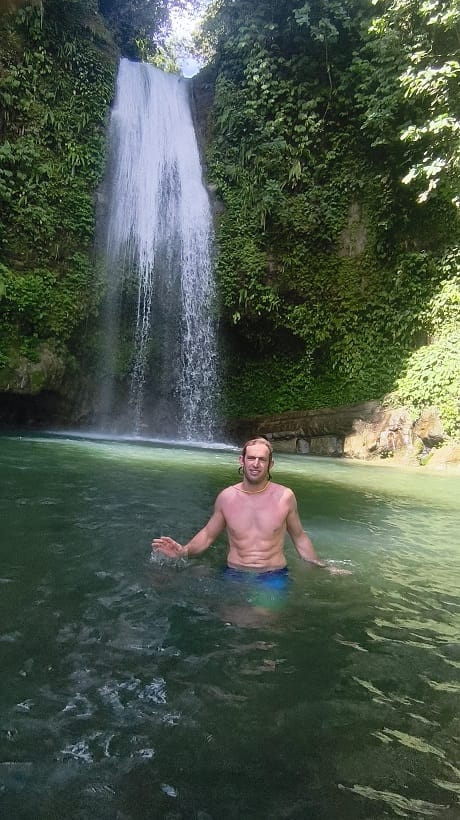
The key distinction for Mentawai tribe tourism: tribe tours do not take place inside Siberut National Park. They take place in the community forests of Siberut Island — areas of traditional Mentawai land use that directly border the national park boundary.
These community forests are not part of the protected national park zone. They are managed under traditional Mentawai land use agreements and are legally accessible to residents and authorized visitors. The Mentawai tribal villages sit within these community forests — outside the protected zone but part of the same ancient, biodiverse landscape.
The national park interior — where endemic primates are most frequently encountered — requires special permits and is accessible only through authorized, deeper trekking. Pulau Asli Tour can arrange dedicated deep forest treks for guests whose primary goal is wildlife observation, as a separate add-on to the tribe tour. This must be requested at the time of booking due to the significant distance and advance coordination required.
Tourism Access and Permits
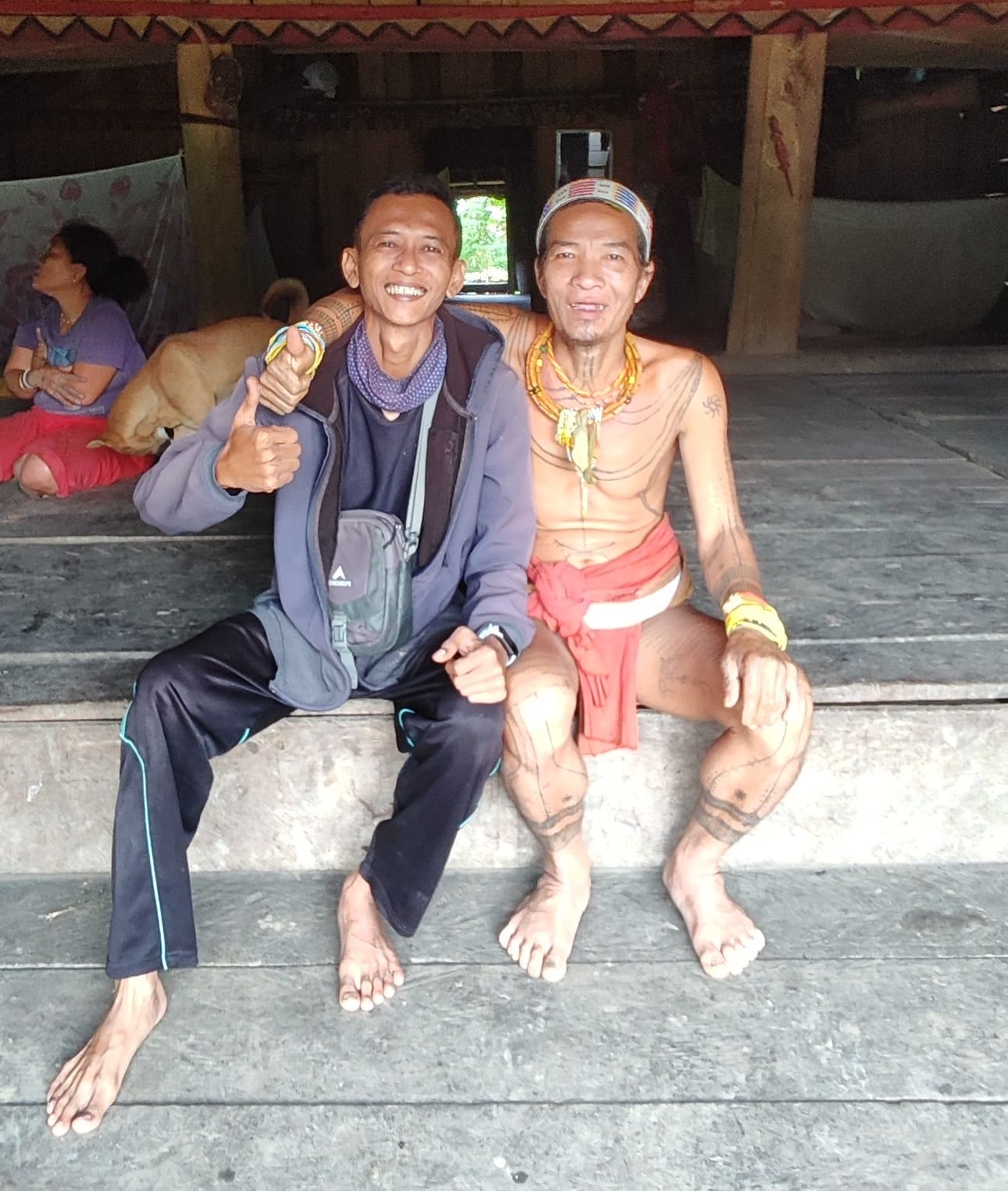
Visiting Siberut Island for tribe tourism requires permits at two levels: government-level permits (through the relevant Indonesian tourism and conservation authorities) and tribal chief level permits — community approval from the specific villages being visited.
Pulau Asli Tour secures all permits for every group before departure. Andrian Salis, a local guide in Siberut — born on the island, 3rd-generation veteran, with deep community relationships — is uniquely positioned to obtain and maintain these permits. Guests carry no permit burden; all paperwork is handled by Andrian.
The 4–7 hour fast ferry journey from Muaro Padang (departing Tuesday, Thursday, Saturday) is the primary access route to Siberut Island. River boats then take guests from the main port further into the community forests.
Conservation Status and Challenges
Despite its UNESCO status and national park designation, Siberut faces significant conservation pressures:
- Illegal logging — timber extraction within and near the national park boundary
- Wildlife hunting — endemic primates are sometimes hunted despite protected status
- Agricultural encroachment — expansion of oil palm and rubber into forest margins
- Cultural change — traditional ecological knowledge at risk as younger generations migrate to urban areas
Community-based tourism that channels economic value directly to local families creates a financial incentive to maintain rather than exploit forest resources. This is a core philosophy of Pulau Asli Tour — not simply as marketing language but as the structural reason why direct-booking, community-revenue tourism matters for conservation outcomes.
Questions About Siberut National Park
Experience Siberut Island
Join a tribe tour directly bordering Siberut National Park. Small group only.