

Mentawai Tribe Food: What You'll Eat in the UMA Longhouse
When guests join a Mentawai tribe tour with Pulau Asli Tour, the food is almost always what surprises them most. Not because it is strange — but because it is extraordinary in its simplicity. Deep inside Siberut Island, directly bordering the 403,000-hectare Siberut National Park, the Mentawai people eat what the forest, river, and land provide. No supermarkets. No refrigeration. No imported spices on a shelf. Every meal is alive with the jungle around it.
I grew up eating this food. As a 3rd-generation Mentawai veteran raising the 4th generation on Siberut, I have eaten sago my entire life — ground fresh by hand, cooked over a wood fire, served on a palm leaf. I have watched guests who swore they would never try sago grubs end up asking for seconds. Mentawai tribe food is one of the last truly wild diets on earth, and spending a week eating this way changes how you think about food forever.
Here is everything you need to know about what you will eat when you visit the Mentawai tribe on Siberut Island.
Sago: The Heartbeat of the Mentawai Diet
Ask any Mentawai person what they eat and the answer is always the same: sago. The sago palm — Metroxylon sagu — grows in dense clusters across Siberut's wetlands and riverbanks. It is not just food. It is identity. It is sustenance. It is the reason the Mentawai people have survived and thrived in this jungle for thousands of years.
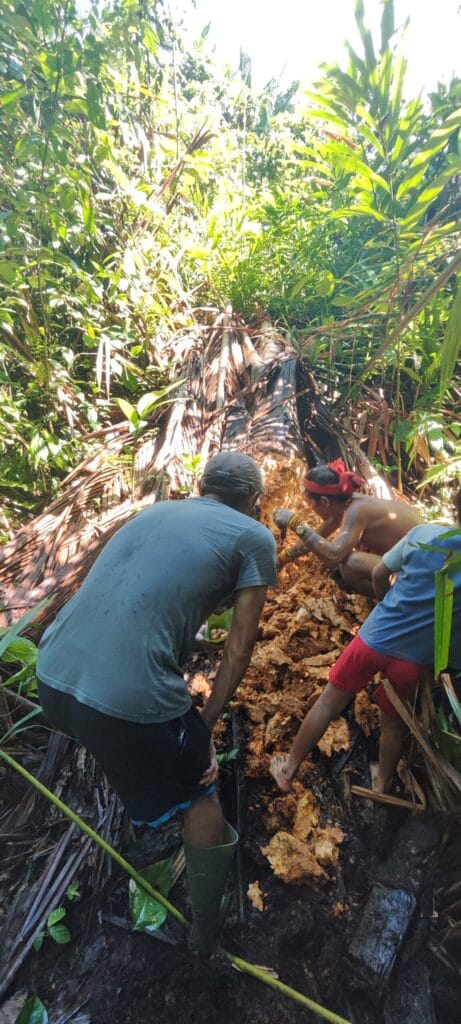
Processing sago is a communal act. When a mature sago palm is selected — typically 8 to 10 years old — the whole clan participates. The palm is felled with an axe, the outer bark is stripped away, and the white, fibrous pith is scraped out with a sharpened tool. The scraped pith is then kneaded and washed with river water through a filter of woven bark, and the cloudy white liquid that drains out is left to settle. What remains at the bottom is pure sago starch — the flour of the jungle.
From that raw starch, Mentawai cooks prepare several dishes. The most common is sagu bakar — sago grilled inside a green bamboo tube or wrapped tightly in banana leaves and placed directly over hot coals. It emerges firm on the outside, slightly gelatinous within — a little like a dense rice cake with a mild, earthy sweetness. Another form is papeda, a soft porridge stirred in boiling water and eaten with fish or vegetables. On special occasions, sago is mixed with coconut milk and shaped into thick, round cakes baked on flat stones beside the fire.
On a Pulau Asli Tour tribe trek, you will eat sago at nearly every meal in some form. It is filling, energising, and genuinely delicious when prepared well.
Taro, River Fish, and the Vegetables of the Forest Floor
Alongside sago, taro — known locally as keladi — is one of the most important crops in the Mentawai diet. Taro corms are planted in small garden plots beside the UMA longhouse and along river margins. They are boiled or roasted in ash, producing a dense, starchy vegetable with a flavour somewhere between potato and sweet potato. The large taro leaves are also used as natural wrapping to steam other foods — a technique that imparts a gentle, green earthiness to everything cooked inside them.
The rivers of Siberut are crystal clear and teeming with freshwater fish. Fishing is a near-daily activity — small woven basket traps are set in the shallows overnight, and in the morning the catch is cleaned and grilled over open flame or simmered in a light broth with river greens. The fish are small but intensely flavoured, their flesh flaking off bamboo skewers with the delicacy of something you would pay a lot for in a restaurant. You will not pay for it here — it comes with your trek.
Wild greens, fern shoots, and river herbs round out the Mentawai vegetable repertoire. These are foraged on the trail, blanched quickly over the fire, and served alongside fish or sago. The Mentawai people know exactly which plants are edible, which are medicinal, and which are sacred — a botanical knowledge passed down through the Mentawai tribe's oral tradition over countless generations.
Sago Grubs: The Delicacy That Changes Minds
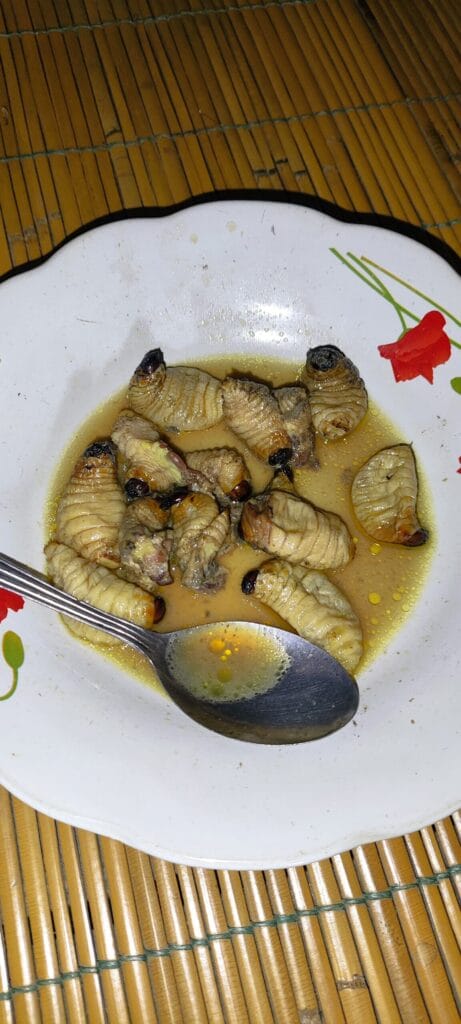
No discussion of Mentawai tribe food is complete without ulat sagu — sago grubs. The larva of the Rhynchophorus ferrugineus palm weevil, these fat, creamy grubs develop inside the rotting trunk of a felled sago palm over a period of several weeks. Finding them is a skill: the Mentawai know exactly how long after felling a palm to return, and how to read the sound of knocking on the trunk to locate the densest clusters within.
They are a genuine delicacy — prized, shared, offered to honoured guests. Nutritionally, they are outstanding: high in protein, rich in oleic acid (the same healthy fat found in olive oil), and calorie-dense in a way that matters when you are spending long days trekking through jungle. The Mentawai eat them live (swallowed whole, which guests are rarely asked to do), roasted on a skewer over the fire until the skin crisps and the interior melts into something approaching bone marrow, or lightly fried in their own fat with a little salt.
I have guided hundreds of guests through this experience. The pattern is always the same: a long hesitation, then a small, cautious bite, then a look of genuine surprise. I have watched guests who swore they would never try sago grubs end up asking for seconds. The roasted version has a nutty, rich, slightly smoky flavour that is genuinely hard to dislike. The live version is — I will be honest — more of a rite of passage. You are welcome to skip it.
Wild Boar, Hunting, and the Protein of the Deep Forest
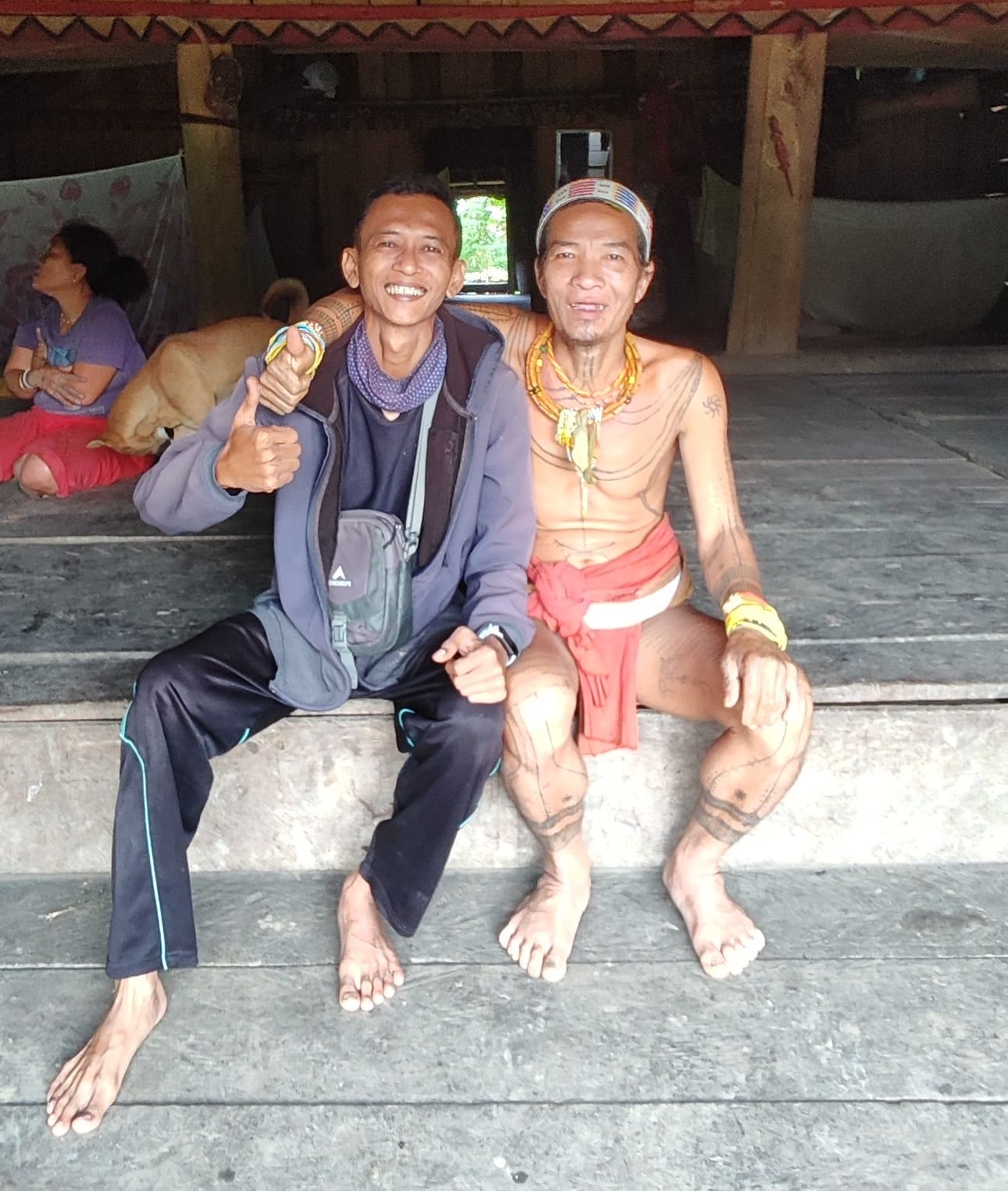
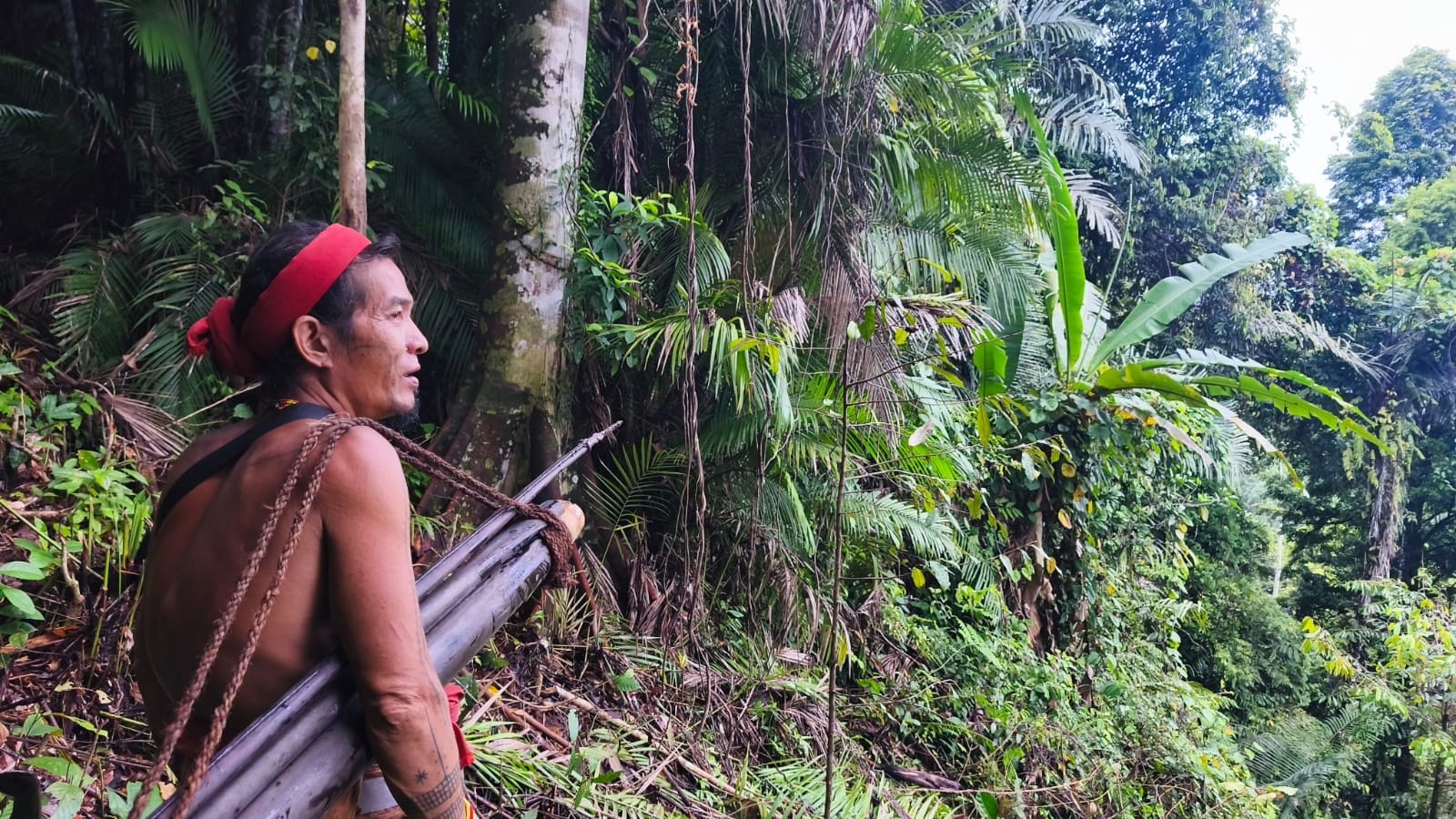
Wild boar (Sus scrofa) is the prestige protein of the Mentawai diet — not an everyday food, but the centrepiece of celebrations, ceremonies, and feasts that mark important moments in tribal life. Boar are hunted using bow and arrow (panah beracun — poison arrows), a skill that takes years to master and that sits at the very core of Mentawai male identity. A successful hunt is a communal event: the boar is carried back to the UMA on a pole, butchered beside the longhouse, and distributed according to strict social rules that reflect the clan structure.
The cooking of boar is slow and thorough — the meat is often smoked over green wood fires for hours, both to cook it fully and to preserve it without refrigeration. Fat renders down into the sago and taro accompaniments, enriching everything. On a longer tribe tour — particularly the 5-day immersion or the 6- and 7-day packages — there is a reasonable chance you will be present for or share in a communal meal that includes wild boar prepared this way. It is one of the most memorable meals of most guests' lives.
Other protein sources include freshwater prawns, small jungle birds, and occasionally monitor lizard, though these are less common in the daily diet. The Sikerei shaman also holds knowledge of which animals carry spiritual significance and cannot be eaten at certain times — another layer of Mentawai food culture that goes far beyond simple nutrition.
Tropical Fruits, Open Fire Cooking, and the Art of Leaf Wrapping
The forests of Siberut are abundant with fruit: wild durian, rambutan, langsat, papaya, and a dozen varieties of banana — both cooking bananas and sweet dessert varieties that you will not find in any market outside the island. Fruit is eaten casually throughout the day, picked directly from trees during trekking, or brought back to the UMA for communal sharing. Coconut is used as both food and cooking medium: coconut milk enriches sago preparations and fish broths, and the husk serves as both kindling and scrubbing tool.
Mentawai cooking has no oven, no gas flame, no microwave. Everything is done on an open wood fire built inside the longhouse on a raised clay hearth that also serves to keep the structure warm and dry. The techniques are deceptively simple but require real skill: reading the heat of coals, knowing when bamboo is about to burst and needs turning, understanding which leaves — banana, taro, sago — impart which flavour profile when used for wrapping and steaming.
Leaf wrapping is one of the most widely used cooking methods. Fish, sago cakes, taro parcels — all can be wrapped tightly in banana leaves, sealed with a bamboo skewer, and placed directly in the coals. The leaf steams the contents from within while charring on the outside, and the result is food that is simultaneously delicate and deeply smoky. It is also completely biodegradable — the Mentawai have zero-waste cooking baked into their culture long before that phrase existed.
What Tribe Tour Guests Eat: Meals on a Pulau Asli Tour Trek
All tribe tour packages with Pulau Asli Tour include three meals per day throughout the jungle portion of the trek. Meals are primarily local Mentawai cuisine — the same food the community eats. This is intentional. It is not a simplified tourist version of the diet. It is the real thing, prepared by the women and families of the UMA you are staying with.
A typical day of eating on trek looks like this: breakfast is sago porridge (papeda) with river fish or leftover smoked protein from the previous evening, accompanied by whatever fruit is in season. Lunch is lighter — often eaten on the trail, a sago cake wrapped in banana leaf carried from the morning fire, with fruit and river water. Dinner at the UMA is the main meal: grilled fish or boar, sago in one of its forms, taro, river greens, coconut, and quite possibly sago grubs if the timing is right and the palm has been waiting.
On the final night, as guests make their way back toward the coast before the ferry back to Padang, Pulau Asli Tour hosts a seafood dinner at a coastal stop — freshly grilled fish and prawns from the sea, a transition meal between jungle and civilisation that guests consistently describe as one of their favourite moments of the entire trip.
Vegetarians, please let us know at the time of booking — the plant-based elements of the diet are substantial, and we will make sure your meals are fully satisfying. Dietary restrictions of all kinds can be accommodated with advance notice.
Every dollar you spend goes directly to the local Mentawai community. When you eat on a Pulau Asli Tour trek, you are not being served by a catering company — you are eating food prepared by the same hands that built the UMA longhouse you sleep in, grown in gardens tended by the people whose stories you are listening to each evening. That connection is what makes Mentawai tribe food something more than sustenance.
Frequently Asked Questions: Mentawai Tribe Food
What do Mentawai people eat?
The Mentawai diet is built around sago as the daily staple, supplemented by taro (keladi), freshwater river fish, sago grubs (ulat sagu), wild boar hunted with bow and arrow, and a variety of tropical fruits. Everything is cooked fresh over an open fire with no refrigeration — food is as local and seasonal as it gets.
Are sago grubs safe to eat?
Yes, sago grubs (ulat sagu) are completely safe and are a traditional protein source highly valued by the Mentawai people. They are typically cooked over an open fire or eaten raw as a delicacy. Rich in protein and healthy fats, they are a sustainable food that has sustained Mentawai communities for generations. Most guests try them on a tribe tour.
Can vegetarians visit the Mentawai tribe?
Yes, vegetarians are welcome on Mentawai tribe tours. Sago, taro, river greens, and tropical fruits form a substantial plant-based foundation of the Mentawai diet. Please inform Pulau Asli Tour of any dietary requirements at the time of booking and we will ensure your meals are accommodated throughout the jungle trek.
Is the food safe for tourists?
Yes. All meals on Pulau Asli Tour tribe treks are prepared fresh daily using local ingredients. Water is boiled before drinking or provided in sealed bottles. While the cuisine is rustic and cooked over open fire, hygiene standards are maintained throughout. Most guests find the food a highlight of their Mentawai experience rather than a concern.
What is sago?
Sago is a starchy food extracted from the pith of the sago palm tree (Metroxylon sagu), which grows abundantly across Siberut Island. The palm is felled, the pith is scraped and processed with water to extract the starch, which is then dried and cooked. It can be grilled, baked in leaf wrapping, or made into a porridge — the absolute cornerstone of Mentawai tribal food.
Learn More About Mentawai Tribe Life
Ready to Taste the Jungle?
Join a Pulau Asli Tour tribe trek and eat what the Mentawai eat — fresh from the forest, prepared by the people themselves.
Solo travelers welcome · Small group only · 50% deposit to confirm · View all tribe tour packages