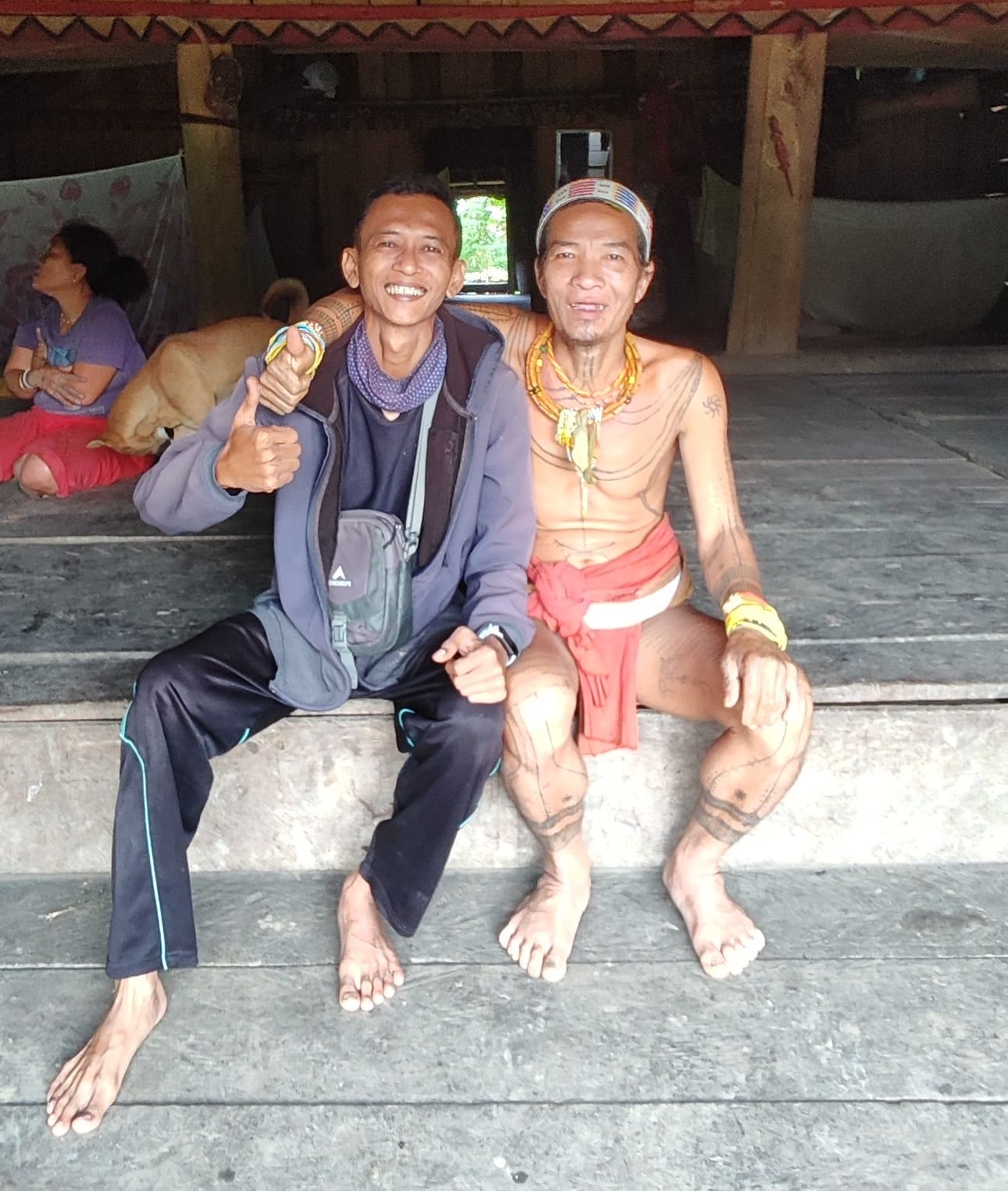

The Mentawai UMA Longhouse: Life Inside Siberut's Sacred Clan Home
There are buildings, and then there are places that hold an entire civilisation. The Mentawai UMA is the second kind. Deep inside Siberut Island — directly bordering the 403,000-hectare Siberut National Park — the UMA longhouse has stood at the centre of Mentawai life for as long as the tribe's oral memory reaches. It is not simply where the Mentawai sleep. It is where they are born, where they are named, where rituals are performed, where decisions are made, where the dead are mourned, and where the living gather every evening around a fire that has been burning in the same spot for generations.
As a 3rd-generation Mentawai veteran raising the 4th generation on Siberut, I have spent my life in and around these structures. When I guide guests through a Mentawai tribe tour, the 2 nights spent inside the UMA are always the part that guests say changed something in them. Not because it is exotic. But because it is undeniably, powerfully human — a form of community life that most of the modern world has quietly forgotten.
This article is a complete guide to the Mentawai UMA: what it is, how it is built, who lives inside it, the daily rhythms of UMA life, the sacred rules guests must follow, and what it means to be welcomed through its doorway as a visitor.
What "UMA" Means: More Than a Building
The word uma in the Mentawai language means, at its simplest, "house." But that translation strips away almost everything important. The UMA is a clan institution. It is the living embodiment of a lineage — a specific family group (also called an uma) that traces its ancestry back through a named male line. To belong to an uma is to know who you are, where you come from, and what your obligations are to the people around you.
Every object inside the UMA has meaning. The central fire hearth is not just for cooking — it is the spiritual anchor of the longhouse, the place where offerings are placed, where the Sikerei shaman performs healing rituals, and where the souls of ancestors are believed to gather. The carved wooden posts that hold the structure aloft are not decoration — they are records of hunts, ceremonies, and clan achievements encoded in geometric patterns that members of the uma can read.
Traditional Mentawai longhouse culture is increasingly rare and at risk of disappearing. The UMA is the physical expression of that heritage — the container that holds language, ritual, knowledge, and identity. When modernisation erodes the UMA — replacing it with individual concrete houses that fragment the clan structure — it does not just change where people sleep. It dismantles the entire architecture of Mentawai society.
UMA Architecture: Built from the Forest, for the Forest
A traditional UMA is an entirely hand-built structure, constructed from materials sourced within walking distance of the site. The main structural posts are hardwood — ironwood where available, or selected dense tropical timbers — sunk directly into the earth or raised on stone plinths to resist moisture. The floor is elevated above ground level, typically 60 to 120 centimetres, on a grid of posts that lifts the living space above the mud of the wet season and allows air to circulate freely beneath.
The floor itself is made from split bamboo, laid in tight rows and lashed with rattan — springy underfoot, self-draining when it rains, cool in the humid heat. The walls are woven palm leaf panels set into a frame of smaller bamboo poles, and the roof is a steep pitch of layered sago palm thatch — the same palm that provides the community's primary food. A well-laid sago thatch roof requires no nails, sheds water with extraordinary efficiency, and lasts a decade before it needs replacing. The steep pitch is not architectural whim: it is an engineering response to the 4,000mm+ annual rainfall of Siberut.
Inside, the central hall runs the length of the structure — a long, open communal space where the fire burns, where meals are eaten, where ceremonies are performed, and where guests sleep. Along the sides and at each end are smaller, semi-enclosed sleeping compartments: one per nuclear family unit, separated from the main hall by woven bamboo partitions that provide acoustic privacy without full separation. There are no doors on these compartments. The UMA has no locked spaces — privacy operates on trust and the unspoken rules of clan etiquette rather than physical barriers.
Larger uma clans may have an adjoining structure called a rusuk or sapou — a smaller satellite dwelling that houses one branch of the family when the main longhouse becomes full. But the UMA remains the ritual centre regardless of which satellite structure a family sleeps in most often.
Who Lives in the UMA: Clan Structure and Social Roles
A typical UMA houses between 10 and 30 people. The composition is always an extended patrilineal family: the clan patriarch — the eldest male of the senior lineage — his wife or wives, their unmarried children, married sons and their families, and occasionally elderly relatives or in-laws who have been formally adopted into the clan. Daughters, once married, join the uma of their husband's clan.
The social hierarchy within the UMA is clear but not rigid. The clan patriarch holds authority over major decisions: where to hunt, when to hold ceremonies, how to resolve disputes with neighbouring clans. But he governs by consensus — long evening discussions around the fire in which every adult male voice carries weight. Women hold authority in the domestic sphere and in knowledge of food production, plant medicine, and child-rearing. Their influence is real even where it is not formalised.
The Sikerei — the shaman — occupies a separate category of authority that cuts across clan hierarchy. The Sikerei's power is spiritual rather than political, but in a society where spiritual and material worlds are understood as inseparable, that authority is immense. Not every UMA has its own Sikerei — shamanic knowledge is rare and its acquisition requires years of apprenticeship, ritual sacrifice, and dietary restriction. When a Sikerei is present, his role in the UMA's daily life is constant: reading signs, performing small daily rituals, maintaining the spiritual health of the clan.
On Pulau Asli Tour treks, we work closely with tribal chief Simon Sapojai and the families of the interior villages we visit. Permits are obtained at both government level AND tribal chief level — a dual-permission structure that ensures our presence is genuinely welcome rather than simply tolerated. When you enter an UMA with us, you enter as a guest of the family, not as a paying observer of a performance.

Daily Life in the UMA: From First Fire to Evening Stories
Life in the UMA runs by the sun and the rhythms of the forest, not by a clock. The day begins before dawn — the first sounds are the coals being revived in the central hearth, a low exhalation of smoke rising through the thatch. Whoever wakes first tends the fire. It is not assigned. It is simply understood.
By first light, the women of the UMA begin breakfast preparation — sago porridge, river fish from traps set the evening before, whatever fruit is ripe near the longhouse. The men who will hunt that day sharpen their bow and arrows (panah beracun) and confer quietly about where game was spotted on yesterday's path. Children not yet old enough to work independently cluster near the fire, eating and listening to adult conversation with the focused attention of those who learn entirely through observation and imitation.
The middle part of the day is the busiest: men in the forest hunting, fishing, felling sago palms, maintaining garden plots; women processing sago, weaving, tending children, gathering plants. The UMA itself is quietest in these hours — a grandparent minding toddlers, perhaps a Sikerei in quiet contemplation before an evening ritual. The jungle presses close and the sound of the river is constant.
Late afternoon brings everyone back. The catch is assessed, divided, and prepared. As the light fails and the fire is built up for the evening, the UMA fills again with voices. Dinner is communal. In the flickering firelight, the full social texture of the UMA becomes visible: who speaks to whom, who defers, who tells the stories, how the children are disciplined (rarely, and gently), how decisions are arrived at through conversation rather than decree.
Evenings often extend late when guests are present — not because of performance, but because curiosity is mutual. The Mentawai want to know where you come from, what your family is like, what food you eat at home. The exchange flows in both directions, and those evening conversations around the UMA fire are consistently what guests tell me they remember most clearly, months and years later.
Sacred Rules for Guests: How to Behave Inside the UMA
Entering an UMA as a guest carries genuine obligations. These are not hotel rules invented for tourists — they are the same behavioural codes that every Mentawai person learns from childhood, and following them is both a practical courtesy and a form of respect for a living spiritual tradition. Pulau Asli Tour briefs every guest thoroughly before entering any longhouse. Here is what you need to know:
- Remove your shoes before entering. The UMA floor is a sacred space. Shoes carry the outside world — mud, death, disruption — into a space that must remain spiritually clean.
- Never point your feet toward the central fire. The fire hearth is the spiritual axis of the longhouse. Pointing feet — considered the lowest, most impure part of the body — toward it is a serious breach of respect.
- Ask before photographing rituals or sacred objects. Not everything in the UMA is available for documentation. The Sikerei's ritual tools, offerings, and ceremonial sequences are sacred, not photogenic props. Ask. If the answer is no, accept it gracefully.
- Do not touch ceremonial items unless specifically invited. This includes carved objects, flower offerings, animal skull arrangements, and the shaman's implements.
- Speak quietly in the evenings after the fire is built up. This is when ritual time begins. Loud voices and sudden movements are disruptive to the spiritual atmosphere the family maintains.
- Eat what is offered and say so gratefully. Refusing food offered by a host in the UMA is a significant social misstep. You do not have to eat large quantities, but you should taste everything that is placed before you.
These rules are not burdensome. In practice, guests find that following them produces a quality of presence and attention that makes the experience far richer. When you move quietly, observe carefully, and let the UMA's rhythms set the pace, you see things that a louder, less careful visitor would miss entirely.
Sleeping in the UMA: The Heart of the Tribe Tour Experience
On a Pulau Asli Tour tribe trek, 2 nights inside a living UMA longhouse is the centrepiece of every package from the 3-day tour upward. You sleep on woven mats in the main hall or a sleeping compartment, with mosquito nets provided (as well as insect repellent and boat shoes for trekking). The UMA is not heated and not air-conditioned — the same fire that cooks dinner also warms the longhouse through the night, and the thick thatch keeps the interior remarkably temperate even during rain.
This is not a homestay in the conventional tourism sense. The family does not vacate their normal routines to accommodate you — you enter their normal life and observe how it moves. For longer treks — particularly the 5-day immersion — there is enough time to genuinely settle into the UMA's rhythms, to begin recognising the daily cues and patterns, to have real conversations through Andrian's interpretation rather than just exchanging pleasantries.
Tribal tattoos — a permanent, sacred form of body art with deep spiritual significance in Mentawai culture — are available to guests who wish to participate, but only as a permanent procedure, at extra cost, and must be requested at time of booking so the appropriate preparations can be arranged. This is not a tourist activity — it is a genuine cultural transmission that the Sikerei performs with full ritual seriousness.
Every dollar you spend goes directly to the local Mentawai community. The families who host Pulau Asli Tour guests receive direct compensation for their time, food, and welcome. This is not a trickle-down tourism model where a distant agency takes the majority of the fee — it is a direct relationship between the visitor, the guide (that is me), and the families of the interior uma. Supporting this model is what keeps UMA culture alive and relevant to the younger Mentawai generation who might otherwise see it only as an obstacle to modernity.
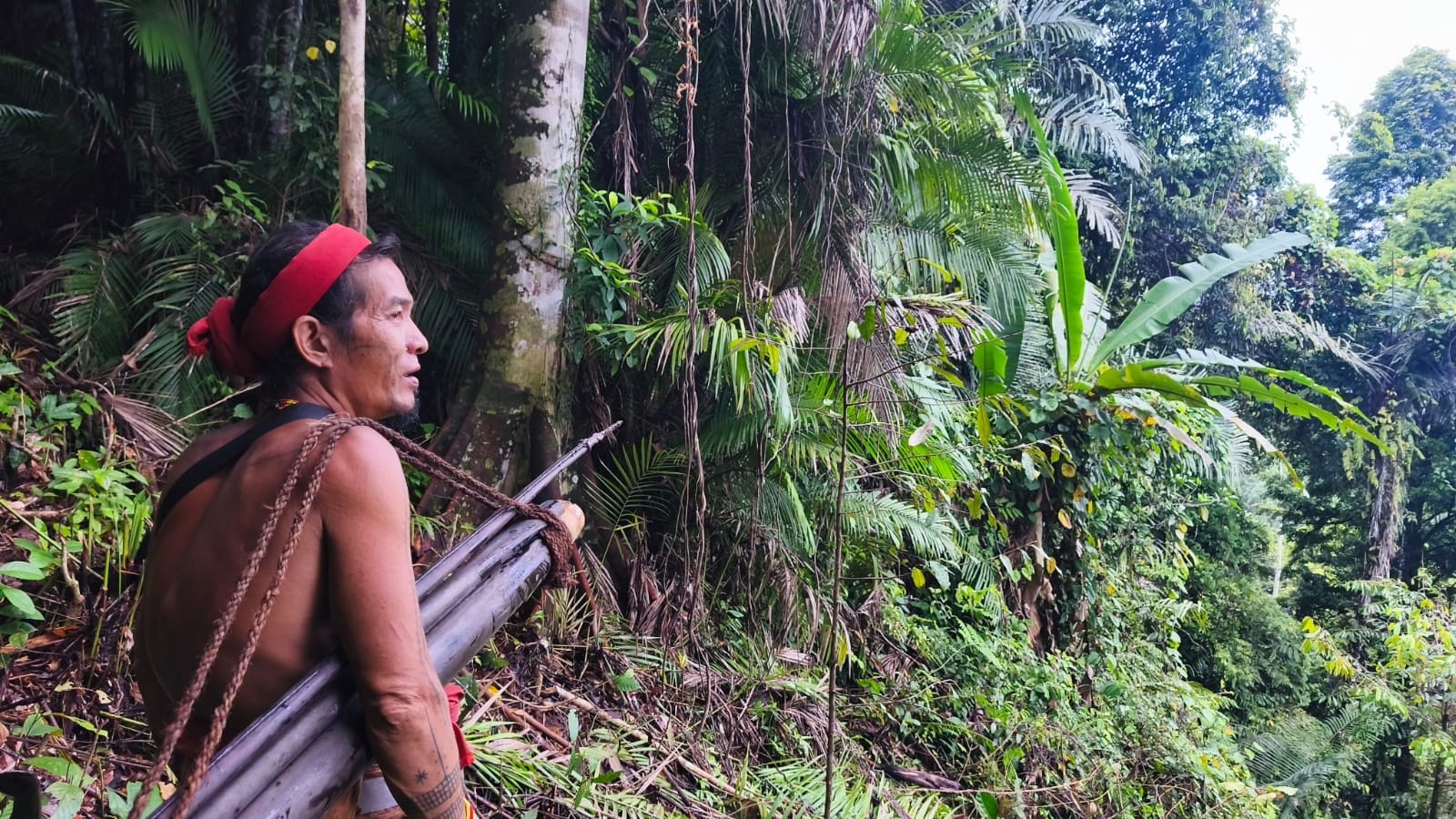
Is the UMA Still Alive Today? Endangered but Standing
The honest answer is: yes, but under pressure. The coastal communities of Siberut have been steadily modernised since the 1970s — concrete government housing, schooling that prioritises Indonesian over Mentawai languages, missionary-influenced pressure to abandon traditional spiritual practices. For communities within easy reach of the district capital at Muara Siberut, the UMA is increasingly a ceremonial structure rather than a daily home.
But the interior is different. The villages accessible only by river — several hours by longboat from the coast — maintain living UMA culture with much greater integrity. The families who host Pulau Asli Tour guests are not performing tradition for tourists. They live in their UMA because it is the right way to live, because it works, because the community it creates is stronger and more resilient than anything the outside world has offered as a replacement.
UNESCO's recognition of Mentawai cultural heritage as endangered is both a warning and a lifeline. It brings international attention to what is at stake. Responsible tourism — the kind that puts money directly into community hands, that operates with dual permits at government level AND tribal chief level, that treats the UMA as a sacred space rather than a scenic backdrop — is one of the few economic forces that makes preserving this way of life financially viable for the younger generation.
That is what we are building with Pulau Asli Tour. Not a museum. Not a performance. A living relationship between the outside world and the UMA community that strengthens both sides. To read more about the broader Siberut National Park ecosystem that surrounds and protects these communities, or to understand the personal story of how Pulau Asli Tour came to be built on this principle, follow those links — or book your UMA trek with Andrian directly.
Frequently Asked Questions: The Mentawai UMA Longhouse
What is a Mentawai UMA?
The UMA (pronounced OO-mah) is the traditional clan longhouse of the Mentawai people on Siberut Island. It is far more than a building — it is the spiritual, social, and physical centre of extended family life. Each UMA belongs to a specific clan lineage and serves as the communal space for meals, ceremonies, storytelling, and all major decisions affecting the group.
How many people live in a Mentawai UMA?
A typical UMA houses between 10 and 30 people from the same extended family clan. This includes the clan patriarch and his family, married sons and their families, and sometimes elder relatives. Each nuclear family has a semi-private sleeping compartment within the longhouse, while the main central hall is shared for communal meals, rituals, and daily gathering.
Can tourists sleep in a Mentawai UMA?
Yes — sleeping in the UMA for 2 nights is the central experience of a Pulau Asli Tour tribe trek. Guests sleep on woven mats inside the longhouse, with mosquito nets provided. This is genuine cultural immersion, not a recreation. The family continues their normal daily life around you, and that proximity is precisely what makes it unlike any hotel experience on earth.
What are the rules for visiting a Mentawai UMA?
Key rules include: remove shoes before entering, never point your feet toward the central fire hearth (considered deeply disrespectful), always ask permission before photographing rituals or sacred objects, do not touch ceremonial items unless invited to do so, speak quietly in the evenings, and follow your guide's instructions about which areas are open to guests. Pulau Asli Tour briefs every guest before entry.
Is the Mentawai UMA still in use today?
Yes, active UMA longhouses are still lived in daily by Mentawai families on Siberut Island, particularly in the interior villages accessible only by river. Modernisation has affected coastal communities, but the deep interior — where Pulau Asli Tour operates — maintains living UMA culture. UNESCO has recognised Mentawai cultural heritage as critically endangered, making every visit an act of meaningful preservation.
Explore More: Mentawai Tribe Life on Siberut
Sleep in a Living UMA Longhouse
2 nights inside a real Mentawai UMA, with a family who has lived this way for generations. This is what we do.
Solo travelers welcome · Small group only · 50% deposit to confirm · Read our FAQ