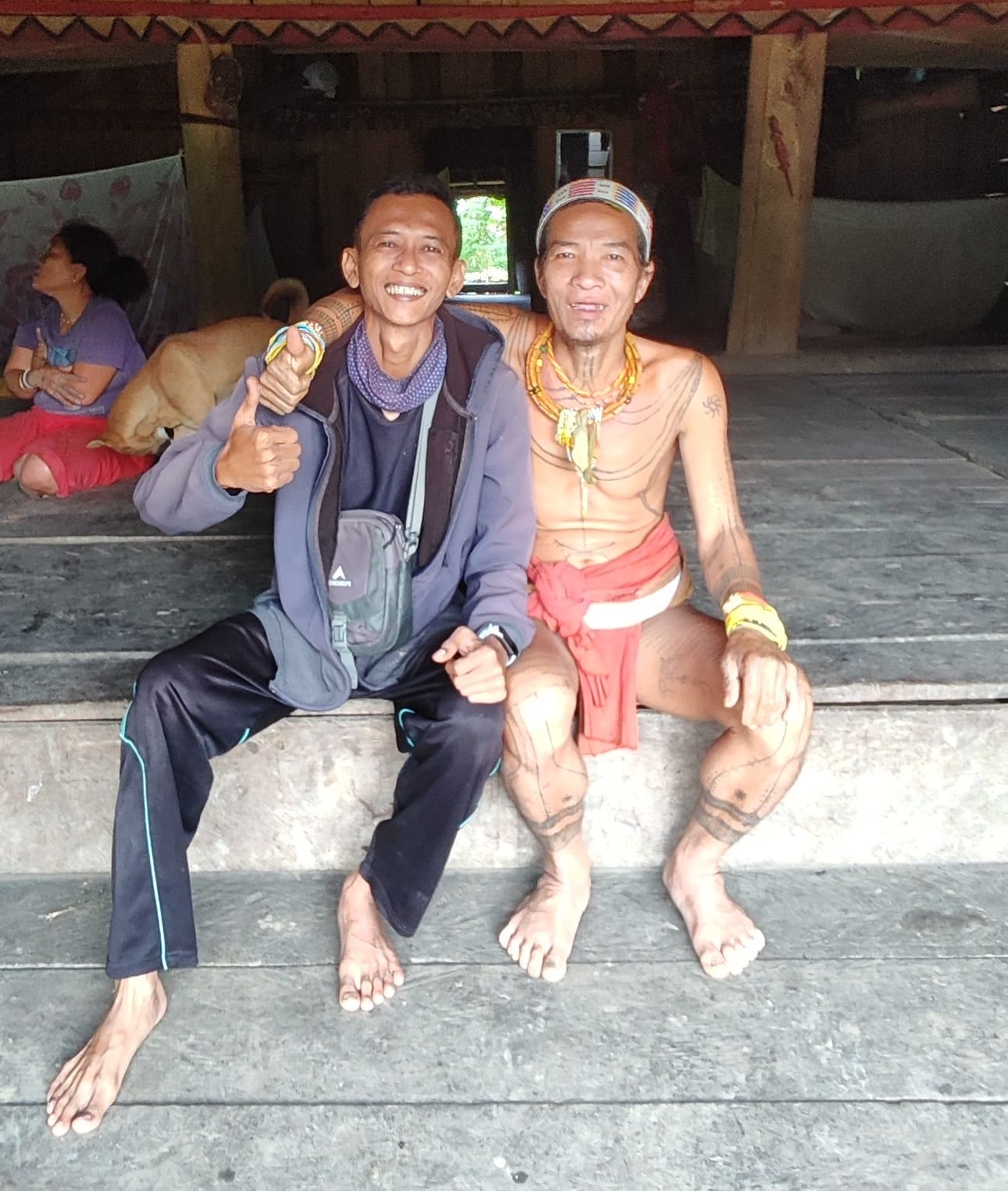

Mentawai Sikerei Ceremony
Healing Rituals, Songs & Forest Spirits — Insider Guide
A Mentawai Sikerei ceremony is one of the rarest living rituals on earth — still performed in the forest longhouses of Siberut Island, unchanged for centuries. The Sikerei shaman is the spiritual centre of Mentawai tribal life. Not a performer. Not a cultural exhibit. The Sikerei is the living bridge between the physical world and the spirit world — the healer, mediator, and keeper of ancestral knowledge within each Uma clan on Siberut Island. Understanding what a Sikerei ceremony actually is, and how to witness one respectfully, is essential before you visit.
I am Andrian Salis, a 3rd-generation Mentawai veteran raising the 4th generation on Siberut. I grew up on Siberut Island. I have sat with Sikerei shamans since childhood. The knowledge in this article comes from lived experience, not from a textbook. If you want to experience this on a Mentawai tribe tour, read this first — or start with the complete tribe tour guide for practical planning information.
Who Is the Sikerei?
The Sikerei is a Mentawai shaman — a healer and spiritual practitioner who holds one of the most important roles in Uma clan society. The title is earned through years of apprenticeship under an established Sikerei, learning:
- Forest plant medicine — which plants cure which conditions, how to prepare them
- Spirit knowledge — understanding of the spirit world, ancestral beings, and their relationships with the living
- Ceremonial chants (urai) — specific vocal formulas for specific healing situations
- Ritual objects and their powers — specific flowers, leaves, and items that carry spiritual force
- The laws of punen — periods of ritual restriction and taboo that govern ceremonial life
Not every Mentawai person becomes a Sikerei. It is a vocation — some are born into families with Sikerei lineage, others are called later in life. An Uma community may have one to several Sikerei depending on its size.
What Happens in a Sikerei Healing Ceremony
When a clan member falls ill, the Sikerei is called. The diagnosis process itself is ceremonial — the Sikerei enters a state of heightened spiritual awareness through specific chants and preparations, seeking to identify which spirit has disturbed the soul of the sick person and why.
The Stages of a Healing Ceremony
The Sikerei bathes, dresses in ceremonial attire — feather headdress, bark cloth loincloth, bead necklaces, leaf and flower decorations — and gathers the necessary plants and sacred objects.
The ceremony begins with specific urai — chants in the old Mentawai language. Each ailment and spirit requires a different urai. These chants are not prayers; they are direct communication with specific spirits, naming them and negotiating with them.
The Sikerei applies medicinal plants — leaves, bark, roots — to the patient's body, often with specific gestures and continued chanting. The combination of physical plant medicine and spiritual intervention is simultaneous.
Mentawai belief holds that illness is caused by the departure of part of the soul. The Sikerei journeys spiritually to retrieve the soul and return it to the patient. This stage may involve trance states and specific movements.
After the healing, a period of punen begins — specific activities are forbidden, certain foods must not be eaten, and normal life is restricted until the healing is complete. The Sikerei determines the duration and rules.
What the Sikerei Wears: The Meaning Behind the Attire
The ceremonial dress of the Sikerei is not decoration — every element carries specific meaning:
- Feather headdress: Hornbill or rooster feathers represent the Sikerei's spiritual authority and connection to the upper world. The number and type of feathers indicate rank.
- Bark cloth loincloth (kabit): Made from beaten tree bark — one of the oldest forms of cloth in human history, still worn in ceremonies.
- Bead necklaces: Multiple strands of beads of different colours represent the Sikerei's spiritual achievements and the spirits they have relationship with.
- Flower and leaf decorations: Specific flowers are chosen for their spiritual properties, not for appearance. The Sikerei's guide spirits recognise these.
- Body tattoos: Each tattoo pattern on a Sikerei's body has specific meaning — spiritual protections, clan identity, and markers of the knowledge they carry. Tattoos are applied throughout a Sikerei's life as they gain new knowledge and pass new levels of initiation. See our guide to Mentawai Sikerei shamans for more detail.
The Turuk: Ceremonial Dance Connected to the Sikerei
The Turuk is a traditional Mentawai ceremonial dance, performed in connection with major healing ceremonies, clan events, and to welcome important visitors. It is not a tourist performance — it is a genuine cultural practice that guests may be invited to observe, and sometimes informally join, during longer tribe tours.
The Turuk involves rhythmic movements to the beat of drums and percussion, performed by men and women of the Uma clan. When a Sikerei participates, the Turuk carries additional spiritual dimensions as the shaman's movements channel specific spiritual energies.
How to Witness a Sikerei Ceremony Respectfully
If you are fortunate enough to witness a Sikerei ceremony, the following conduct is expected:
- Sit quietly in the position indicated by your guide
- Follow your guide's instruction at all times
- Ask permission before photographing (some moments are not permitted)
- Accept food or drink if offered — refusal is impolite
- Maintain a respectful silence during chanting
- Cross between the Sikerei and the patient during the ritual
- Touch ritual objects without permission
- Laugh or make casual comments during chanting
- Flash photography during spiritual moments
- Record video without explicit permission
- Ask to "try" any ritual implements
All Pulau Asli Tour tribe tour guests receive a cultural briefing from Andrian before entering any Uma village. Our permits are obtained at both government level and tribal chief level — not only do we follow legal requirements, we follow the social protocols that the tribal chief expects of visitors. Book your Sikerei experience with Andrian — every guest receives a full cultural briefing before arrival.
Types of Sikerei Ceremonies: Not Just Healing
Most visitors assume "Sikerei ceremony" means a healing ritual. But the Sikerei's role in Uma clan life extends far beyond illness. There are multiple categories of ceremonies, each serving a different function in maintaining the spiritual and social health of the community.
Arat Sabulungan — The Spirit Ceremony
The foundation of all Mentawai spiritual practice. Arat Sabulungan acknowledges the spirits of animals, plants, rivers, and ancestors. The Sikerei maintains the community's ongoing relationship with these spirits through regular ritual communication. This is not an occasional event — it is a continuous practice woven into daily and seasonal life.
Puliaijat — The Major Feast Ceremony
The Puliaijat is the grandest of all Mentawai ceremonies — a multi-day communal event involving feasting, the Turuk dance, communal chanting, and the collective reaffirmation of clan identity. Puliaijat can be held to mark major life events (births, marriages, successful hunts) or to restore harmony after periods of community misfortune. When a guest happens to visit during a Puliaijat, what they witness is extraordinary.
Sibalu-balu — Soul Strengthening
Before a major hunt, a long journey, or a significant life decision, the Sikerei performs sibalu-balu — a protective ceremony that strengthens the soul against spiritual threats encountered in the forest or on water. The ceremony is relatively short but deeply personal. Mentawai hunters would not enter deep forest without it.
Pasighat — The Tattoo Ceremony
Mentawai tattooing is not a cosmetic practice — it is a spiritual one, conducted by the Sikerei (or a designated tattoo specialist within the clan) with full ceremonial protocol. Each tattoo session is preceded by ritual preparation, specific chants, and a punen period afterward. The tattoos themselves are living records of a person's spiritual status and life journey. On longer tribe tours, guests may be permitted to observe — and in rare cases, receive — a traditional Mentawai tattoo.
The Sacred Plants the Sikerei Uses
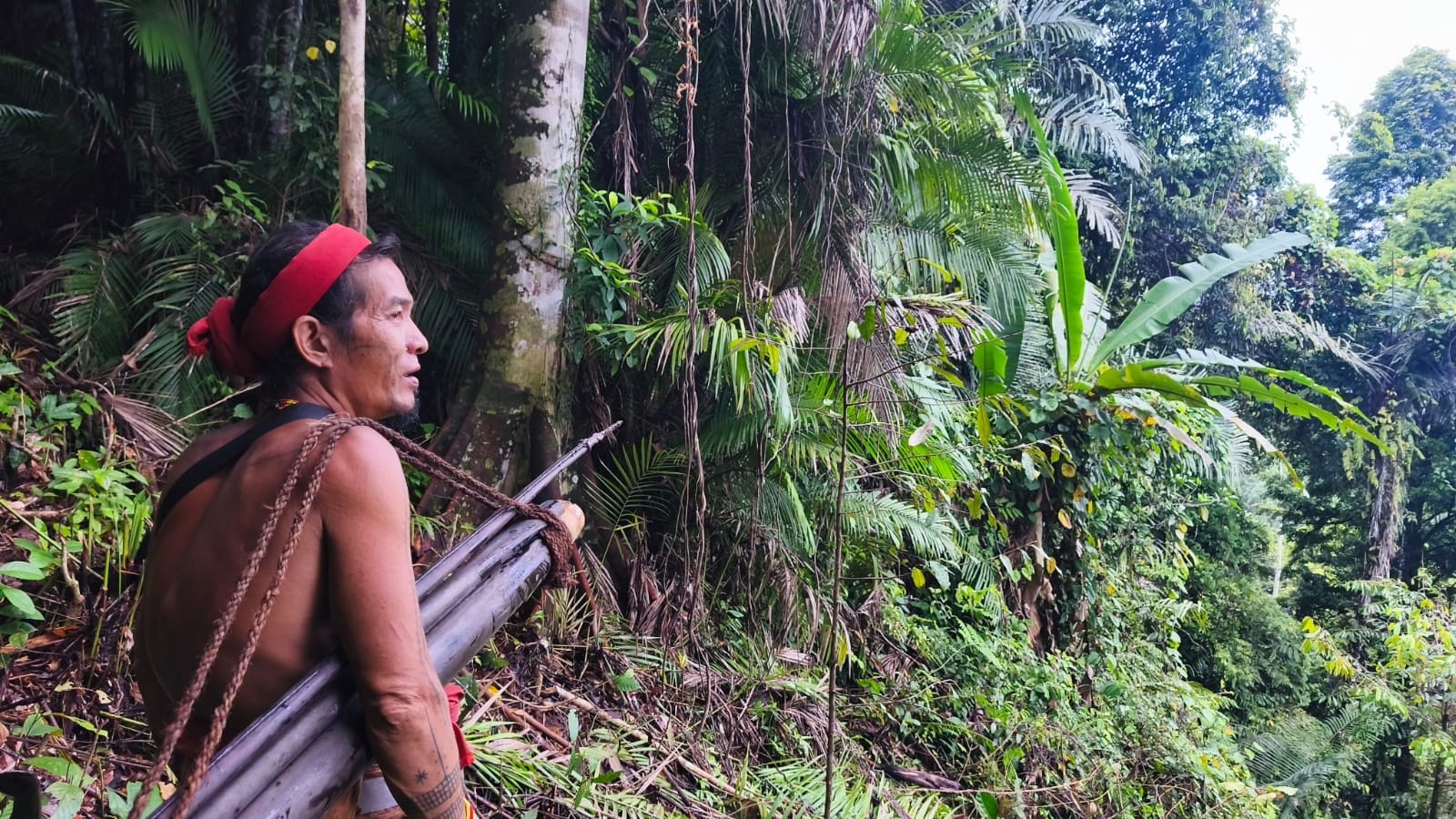
The Sikerei's medical knowledge is inseparable from the forest. The Mentawai rainforest is effectively an open pharmacy — but only the Sikerei knows how to read it. This is knowledge accumulated over generations, passed through apprenticeship, and never written down. When a Sikerei walks through forest, they are reading a text that most humans cannot see.
Several categories of plants are central to Sikerei practice:
- Fever and infection plants: Bark and leaf preparations applied directly to the body or boiled into medicinal drinks. Specific species known to the Sikerei but not shared publicly out of respect for traditional intellectual property.
- Spiritual protection plants: Certain leaves and flowers that are believed to repel malevolent spirits. These are worn during ceremony and placed around the Uma during periods of punen.
- Trance-inducing or consciousness-altering plants: Used sparingly and only by trained Sikerei for deep healing work. This is highly guarded knowledge — not discussed with outsiders and never used recreationally.
- Wound treatment plants: Specific leaves applied as poultices to cuts, infections, and animal bites. The Sikerei's plant knowledge in this area is genuinely effective — many of these species have since been studied by ethnobotanists.
- Ceremonial scent plants: Aromatic plants burned or worn during ceremony to attract benevolent spirits and mark sacred space. These function as the "incense" of Mentawai spiritual practice.
Guests on tribe tours often observe the Sikerei gathering plants before a ceremony. The Siberut rainforest — a UNESCO Biosphere Reserve and home to the 403,000-hectare Siberut National Park — holds thousands of plant species, many still undocumented by science. Your guide will explain what the Sikerei is looking for and why — this is one of the most memorable moments for many visitors, because it makes the depth of forest knowledge viscerally clear.
The Urai: What You Actually Hear in a Sikerei Ceremony
If you stand outside an Uma longhouse during a Sikerei healing ceremony, the first thing that reaches you is sound. Before you see the flowers, before you smell the ceremonial plants, you hear the urai.
The urai is the ceremonial chant of the Sikerei — a sustained, semi-melodic vocal performance in archaic Mentawaiic that can last hours without pause. It sounds unlike anything in modern music or religion. It is closer to an extended invocation — part song, part negotiation, part map. The Sikerei is not praying in the way an outsider might imagine. They are speaking to specific spirits by name, recounting the relationships between the living and the dead, and proposing terms for restoring balance.
Each verse of the urai addresses a different dimension of the problem being solved. The Sikerei might name the illness, its spiritual cause, the spirit responsible, and the remedy proposed. The chant is answered — not in words that outsiders hear, but in signs that only the Sikerei can read: a change in the fire, a sound from the forest, a sensation in the body of the person being healed.
The urai is entirely oral. No written texts preserve it. Each Sikerei's repertoire reflects their lineage, their years of training, and the specific relationships with spirits that their master passed to them. Two Sikerei from different families may use completely different urai for what appears to be the same illness — because the spiritual cause they have diagnosed is different.
Guests who witness a full Sikerei ceremony typically say the urai is the most affecting part. The sound resonates in a way that bypasses conscious thought. You do not need to understand the words to feel that something real and ancient is happening.
Punen: The Sacred Restriction Period That Surrounds Every Ceremony
Every major Sikerei ceremony is surrounded by punen — a period of ritual restriction before and after the ceremony itself. Punen is perhaps the least-documented aspect of Mentawai ceremonial life, but it is one of the most important for visitors to understand.
During punen, specific activities are forbidden for the Uma community — and sometimes for guests as well. Restrictions vary by ceremony type and severity, but commonly include: entering the forest, eating certain animals, receiving outsiders, conducting trade, and specific forms of physical contact. The Sikerei sets the punen rules based on the spiritual context of the ceremony being performed.
Punen can last anywhere from a single night to several weeks. A healing ceremony for a seriously ill community member may require an extended punen affecting the entire Uma household. During this period, the outside world is effectively suspended — the community exists in a liminal state, bounded by spirit relationships rather than daily routine.
For visitors: If you arrive during a punen period, your guide will explain which rules apply to you as a guest. Respecting punen is not optional — it is the fundamental sign of respect that earns the community's trust. Guests who follow punen protocol without complaint are remembered with genuine warmth. Guests who push back are not invited back.
Witnessing the beginning or end of a punen is actually one of the more significant cultural experiences on a tribe tour — because it makes visible the boundaries between the ordinary and the sacred that structure all of Mentawai life. On longer tours (5-day and above), the probability of encountering a punen period naturally is high. Your guide will turn it into one of the most memorable parts of your experience.
This Knowledge Is Disappearing — Faster Than Most People Know
This is not alarmism. It is demographic fact.
The Sikerei who carry full ceremonial knowledge — the complete urai, the plant medicine system, the spiritual maps passed through generations — are mostly men over 60. The apprenticeship system that sustained this knowledge for centuries is weakening. Younger generations are drawn toward modernity, education in mainland schools, and economic opportunities outside the forest. The missionary presence of the past century added further pressure to abandon traditional spiritual practice.
I grew up on Siberut. I have watched this change in my own lifetime. The Sikerei shamans I knew as a child — the ones who taught me the names of forest spirits and how to read the animals' movements — some of them have no successor. When they are gone, that specific thread of knowledge is gone with them. No book preserves it. No museum holds it.
"The window to witness a living Sikerei tradition — not a reconstruction, not a performance, but the real thing — is not indefinitely open."
— Andrian Salis, founder Pulau Asli Tour, 3rd-generation Mentawai veteran raising the 4th generation on Siberut
Responsible tourism — small groups, local guides, community-first approach — is one of the few mechanisms that gives Sikerei knowledge economic value within the community, creating incentive to preserve it. When you visit respectfully with a local operator, you are not just a tourist. You are part of the argument for why this knowledge is worth keeping. That is why booking your tribe tour with Andrian matters beyond the experience itself.
Which Tour Package Gives You the Best Chance?
Ceremonies happen when the clan needs them — not on a schedule. The longer your stay in the Uma, the higher the probability you will naturally encounter a ceremony. Here is how our packages compare:
| Package | Uma Nights | Ceremony Probability | Price from |
|---|---|---|---|
| 3-Day Tour | 1–2 nights | Low–Moderate | USD 215/pp |
| 4-Day Tour | 2–3 nights | Moderate | USD 273/pp |
| 5-Day Tour | 3–4 nights | High | USD 360/pp |
| 6-Day Tour | 4–5 nights | High | USD 400/pp |
| 7-Day Tour | 5–6 nights | Very High | USD 420/pp |
Note: Ceremony witnessing is not guaranteed on any package. Probability reflects number of nights in the Uma longhouse. Prices shown are per person for 3+ group.
Frequently Asked Questions — Sikerei Ceremony
Experience the Sikerei World Firsthand
Join a tribe tour led by a Siberut-born guide. Stay in the Uma. Witness ceremonies as genuine guests of the clan — with all permits, all protocols, and no staging.