Mentawai Indigenous Knowledge
Arat Sabulungan: Mentawai's Living Ancestral Religion
The soul-based belief system that has guided Mentawai life for thousands of years — still alive in the forests of Siberut Island, kept by Sikerei shamans who never stopped practicing.
Ask Andrian About a Tribe TourThe Belief System
What Is Arat Sabulungan?
Arat Sabulungan is the indigenous animist belief system of the Mentawai people — one of the oldest living spiritual traditions in Southeast Asia. The word roughly translates to "following the way of nature" or "the path of leaves." Sabulungan refers to plants and the natural world, reflecting the core Mentawai belief that humans are inseparable from the forest ecosystem.
At the heart of Arat Sabulungan is the concept of simagre — the souls or life-force spirits that inhabit all living beings. A person, an animal, a tree: each has simagre that must be kept in harmony. When souls wander or become captured by malevolent spirits, illness and misfortune follow. When they are in balance, life flourishes.
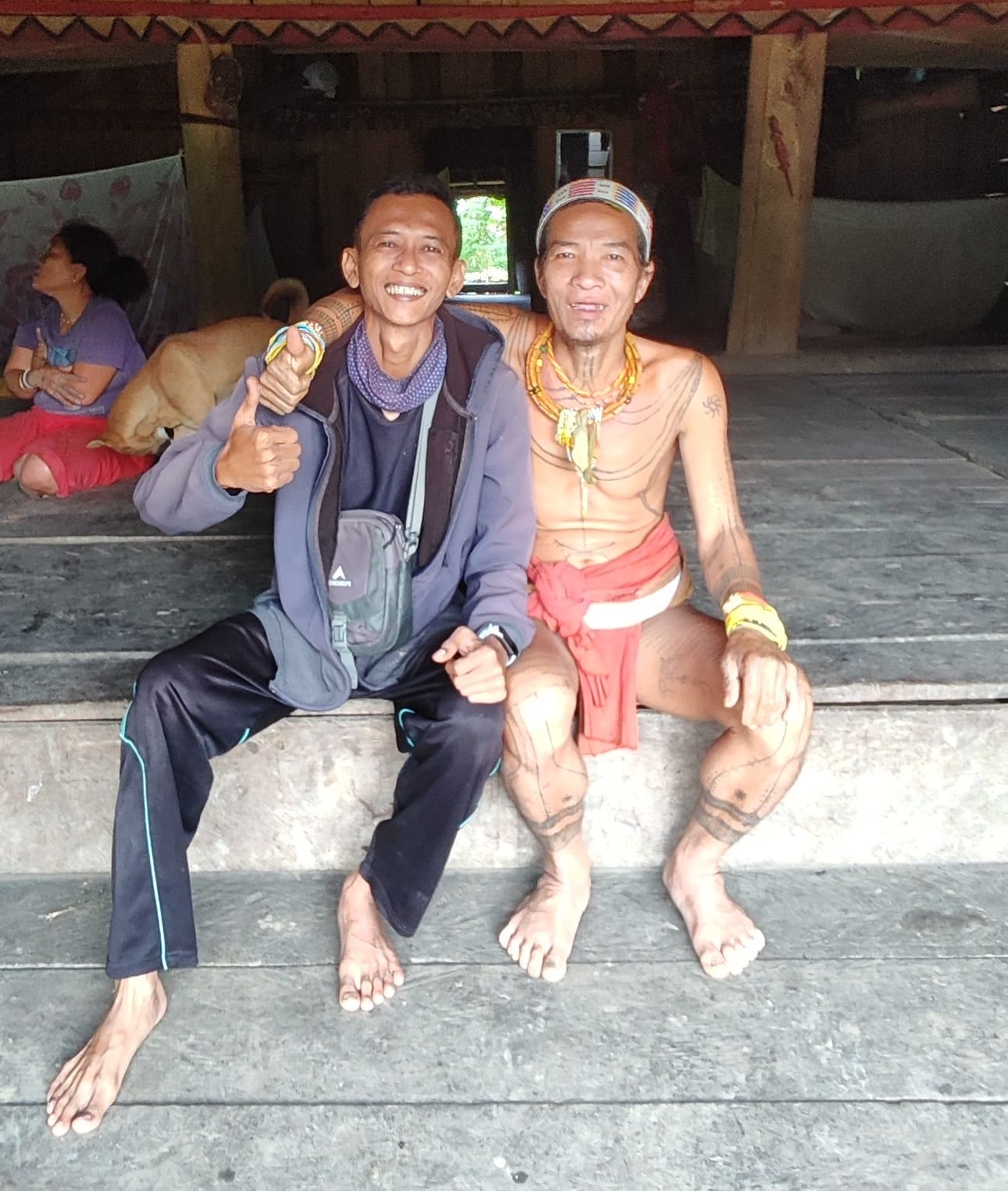
The Sikerei shaman is the keeper of this balance — the spiritual specialist who can communicate with the spirit world, diagnose the cause of illness, and perform ceremonies to restore harmony. See the full Sikerei shaman guide.
Simagre — The Soul
Every living being holds multiple simagre. When a person falls ill, the Sikerei diagnoses which soul has left the body — and why. The healing ceremony calls it back.
Puliaijat — The Ceremony
The main healing and protective ceremony in Arat Sabulungan. A Sikerei performs songs, offerings, and spirit communication to restore balance between the physical and spirit world.
Punen — The Feast
Communal ceremonies of gratitude, hunting preparation, and seasonal celebration. The Uma longhouse fills with song, food, and dancing. Punen can last days and involve the entire village.
Uma — The Longhouse
The spiritual and social center of Arat Sabulungan. Each Uma belongs to a clan lineage. Ancestors are honored here, ceremonies take place here, and the Uma's spiritual protection extends to all who live within it.
Sikeí — The Taboos
Sikerei shamans follow strict dietary and behavioral restrictions called sikeí. Certain foods, activities, and emotional states are forbidden — violations can weaken their spiritual power or cause harm to the community.
Titi — The Tattoo
Traditional Mentawai tattoos are not decorative — they are spiritual markers. Each pattern carries meaning: clan identity, spiritual power, life achievements. Applied by a specialist using a citrus thorn and natural charcoal.
"When people ask me to explain Arat Sabulungan, I tell them: imagine a world where the forest is not a resource — it is a community of souls you must negotiate with, respect, and protect. That is how my family has lived for generations. That is what the Sikerei still teach today."
— Andrian Salis, 3rd-generation Mentawai veteran & founder of Pulau Asli TourHistorical Context
From Suppression to Revival
Arat Sabulungan has survived pressures that would have destroyed most indigenous spiritual traditions. Understanding this history is essential to understanding why the Sikerei who still practice today carry such cultural weight.
Pre-Colonial Era — Thousands of Years
Arat Sabulungan develops in isolation on Siberut Island. The Mentawai people remain separated from mainland Sumatra, allowing their belief system, language, and material culture to evolve independently. The genetic and cultural isolation is estimated at 2,000–6,000 years.
Dutch Colonial Period — First External Pressure
Dutch missionaries and colonial administrators arrive. Christian missions begin converting coastal populations. Inland forest communities maintain Arat Sabulungan more strongly, but external pressure grows. Trade and interaction begin changing traditional clothing and ornamentation.
Indonesian Independence — Government Pressure Begins
Indonesia's new government designates Pancasila's five recognized religions (Islam, Catholicism, Protestantism, Hinduism, Buddhism). Arat Sabulungan is not recognized. Mentawai people face pressure to formally convert to avoid administrative disadvantages.
New Order Suppression — The MKGR Program
The Suharto government launches the MKGR (Mentawai Development Mission) program. Sikerei are pressured to cut their long hair, remove tattoos, and abandon Arat Sabulungan practices. Uma longhouses are declared unsanitary and families are moved to government housing. This is the darkest period for the tradition.
Reformasi — Cultural Rights Reasserted
The fall of Suharto's New Order opens space for indigenous cultural revival across Indonesia. On Siberut, Sikerei who had practiced in secret begin practicing openly again. Long hair grows back. Tattoos are resumed. Uma ceremonies return.
Active Revival — Living Tradition
In villages like Madobag, Matotonan, and Muntei, Arat Sabulungan is actively practiced. Young men are still called to become Sikerei. Ceremonies still take place in Uma longhouses. The tradition survived — and it remains one of the most intact indigenous spiritual systems in the Asia-Pacific region.
For Visitors
How to Respectfully Experience Arat Sabulungan
Arat Sabulungan ceremonies are not performances staged for tourists. They are real spiritual events with real meaning for the community. Witnessing them requires proper introduction, community consent, and respectful behavior.
Pulau Asli Tour arranges access through a two-level permit system: government permits from the Indonesian Forestry Ministry (for access to Siberut National Park areas), and tribal chief permission from the community you will visit. This ensures your visit is welcome — not extractive.
The level of Arat Sabulungan immersion depends on your package:
- 3-Day Tour — Uma introduction, daily life observation, basic ceremonies
- 5-Day Tour — Deeper Sikerei access, flower decoration ceremony, forest plant knowledge
- 7-Day Tour — Maximum immersion: punen feast, hunting knowledge, multi-village access
Tattoos (titi) are available as a separate experience — permanent, extra cost, must be requested at time of booking.
Visitor Guidelines
Respectful Conduct in Arat Sabulungan Spaces
During ceremonies, wait for the Sikerei or your guide to indicate when photography is appropriate. Some ritual moments are private — respect them.
Flowers, offerings, and decorated objects placed around the Uma have spiritual significance. Do not touch or rearrange them.
Sharing food is a spiritual act in Arat Sabulungan. Refusing food offered by the host family is interpreted as distrust. Try what is offered — sago, smoked fish, tubers, grubs.
The forest is a community of souls, not a backdrop. Your guide will tell you which areas are spiritually sensitive.
FAQ
Arat Sabulungan: Common Questions
What is Arat Sabulungan?
Arat Sabulungan is the indigenous animist belief system of the Mentawai people of Siberut Island, Indonesia. It holds that all living beings — humans, animals, and plants — possess souls called simagre. Maintaining harmony between these souls is the foundation of Mentawai spiritual life, guided by Sikerei shamans.
What does "Arat Sabulungan" mean in English?
The term roughly translates to "following the way of nature" or "the path of leaves." Sabulungan refers to plants and the natural world. The name reflects the Mentawai belief that humans are inseparable from the forest ecosystem and must live in spiritual balance with it.
Is Arat Sabulungan still practiced today?
Yes. After being suppressed during Indonesia's New Order period, Arat Sabulungan has experienced a significant revival on Siberut Island. Villages in Madobag and surrounding areas actively practice traditional ceremonies. Sikerei shamans continue to perform healing rituals and accept new apprentices, keeping the tradition alive and transmitting it to the next generation.
What is a Sikerei's role in Arat Sabulungan?
A Sikerei is the spiritual specialist of Mentawai society — the intermediary between the human world and the spirit world. They perform puliaijat healing ceremonies to call back wandering souls, follow strict dietary taboos called sikeí, wear traditional tattoos as spiritual markers, and carry flower decorations that signal their active spiritual status. Their training takes years and involves direct spirit communication.
Can tourists witness Arat Sabulungan ceremonies?
Yes, with proper introduction and tribal chief permission. Pulau Asli Tour arranges respectful access to Sikerei ceremonies and Uma longhouse experiences on Siberut Island. These are real ceremonies with real spiritual purpose — not staged for tourists. Access requires both government-level permits and community consent through the tribal chief.
What are simagre — the Mentawai soul concept?
Simagre are the souls or life-force spirits that inhabit all living beings in Arat Sabulungan. A person holds multiple simagre that can leave the body during sleep, illness, or emotional shock. When simagre wander or are captured by malevolent spirits, illness results. The Sikerei diagnoses which soul is missing and performs ceremony to call it back.
What is the Uma longhouse in Arat Sabulungan?
The Uma is the traditional clan longhouse that serves as the spiritual center of Mentawai life. Each Uma belongs to a clan lineage and holds the ancestral spirits of that family. Ceremonies, communal feasts (punen), and important spiritual rituals all take place within or around the Uma. Visitors who stay inside an Uma are temporarily under its spiritual protection — a meaningful gesture of trust by the host family.
How can I experience Arat Sabulungan as a visitor?
The 5-Day or 7-Day Mentawai tribe tour offers the deepest exposure to Arat Sabulungan. You sleep in an Uma, observe Sikerei rituals, learn about forest plant knowledge, witness flower-decoration ceremonies, and share meals with the host family. All tours include government permits and tribal chief approval. Contact Andrian via WhatsApp to discuss which tour depth suits you best. Learn more about Siberut Island on Wikipedia.
Experience Arat Sabulungan in Person
Guided by Andrian Salis, 3rd-generation Mentawai veteran with direct community relationships in Madobag. Government permits + tribal chief permission included in every tour.
Chat Andrian to Book a Tribe Tour