The Calling: How Spirits Choose a Mentawai Shaman (Sikerei)
Becoming a Sikerei is not a career choice—it is a spiritual calling chosen by the spirits themselves. In Mentawai culture, the path to becoming a shaman follows two distinct routes: one through ancestral lineage and personal initiative, the other through direct selection by the spirit world. This is not modern education; this is ancient wisdom passed down through generations of forest healers.
The Two Sacred Paths to Becoming a Sikerei
Unlike modern society where you choose your profession based on university studies or career interests, the Mentawai worldview is fundamentally different. You do not choose to become a Sikerei—the spirits choose you. However, this spiritual selection manifests through two distinct pathways, each with its own sacred protocol and requirements.
Path 1: The Lineage Path (Personal Initiative)
For those born into Mentawai families with shamanic heritage—particularly families where previous generations have served as Sikerei—the path begins with a conscious request to learn. This is not simply asking permission; it is a formal declaration of intent to undergo the most rigorous spiritual and physical training in Mentawai culture.
The aspirant must approach an existing Sikerei master (called a pansoh) and formally request initiation. The master evaluates the candidate based on several criteria:
- Blood lineage: Family history of spiritual service and connection to the forest
- Character assessment: Patience, humility, respect for tradition, and mental fortitude
- Physical readiness: Ability to endure months of isolation, fasting, and harsh forest conditions
- Spiritual sensitivity: Even without dramatic dreams, some individuals show natural affinity for plant medicine and spiritual communication
If accepted, the training begins immediately. There is no waiting period, no preparation time. The forest calls now, not later.
Path 2: The Spiritual Selection Path (Dream Calling)
This is the most mysterious and powerful path. Some individuals—often from families with shamanic heritage, though not always—are chosen directly by the spirits through recurring, intense dreams that cannot be ignored.
These are not ordinary dreams. They are vivid, persistent visions that occur night after night, sometimes for months or years. The dreams typically feature:
- The ancient rainforest: Dense jungle, towering trees, medicinal plants revealing themselves
- Ancestral spirits: Deceased Sikerei elders, family ancestors, or spirit guides appearing in human or animal form
- Rivers and waterfalls: Sacred water sources, swimming with spirit beings, receiving blessings from water spirits
- Specific animals: Gibbons calling from the canopy, hornbills flying overhead, wild pigs appearing as spirit messengers
- Sacred objects: Traditional bows and arrows, medicinal plants, ceremonial drums (kukua), or tattoo needles appearing in dreams
When these dreams become overwhelming—when they disrupt daily life, cause physical illness, or create an unbearable spiritual pressure—the individual must seek guidance from an existing Sikerei. To ignore the calling is to invite misfortune, illness, or spiritual chaos.
The master Sikerei interprets the dreams and confirms whether this is a genuine calling or simply confusion. If confirmed, the initiation begins immediately. There is no "thinking about it." The spirits have spoken.
The Pangalau: 6+ Months of Forest Isolation
Regardless of which path brought them here, every Sikerei candidate must undergo pangalau—the sacred forest isolation that separates the ordinary person from the spiritual healer. This is the most transformative and challenging period of their life.
The candidate leaves their village and travels deep into the Siberut rainforest, far from human settlement. They live in a simple forest camp with their master Sikerei, sometimes alone with just the master, sometimes with other candidates. The location is deliberately remote—often 2-3 days trek from the nearest village.
1. Medicinal Plant Education (The Living Library)
The candidate must learn to identify, harvest, and prepare over 200 medicinal plants found only in the Siberut rainforest. This is not textbook learning—it is experiential knowledge passed down through direct observation and practice.
The master Sikerei takes the candidate on daily forest walks, pointing out plants and explaining identification (leaf shape, bark texture, flower color, root structure), harvesting protocol (which part to use, what time of day, what lunar phase, what prayers to recite), preparation methods (boiling, pounding, burning, mixing, poultices, infusions), and applications (which illness it treats, dosage, contraindications, spiritual properties).
The candidate must memorize this information perfectly. There are no second chances when someone's life depends on your knowledge.
2. Sacred Chanting (Lia)
Every day, the candidate practices lia—the sacred chants that communicate with spirits. These are not songs; they are precise vocalizations with specific tonal patterns, rhythms, and spiritual frequencies.
The candidate practices chanting for 4-6 hours daily, often starting before dawn and continuing into the evening. The master corrects their pronunciation, tone, and rhythm until it is perfect. A poorly chanted lia is ineffective at best, dangerous at worst.
There are different chants for different purposes: healing chants for specific illnesses, soul-calling chants (pagar) to retrieve wandering spirits, protection chants for forest travel, blessing chants for ceremonies, and spirit-communication chants for divination.
3. Fasting and Physical Purification
The candidate observes strict dietary restrictions during pangalau: intermittent fasting (sometimes eating only once per day, sometimes skipping entire days), forbidden foods (eels, monkeys, one-eyed fish, and other taboo animals), limited water (drinking only from specific forest springs, never stagnant sources), and no salt or spices (food is plain, simple, purely for sustenance).
This purification cleanses the body and sharpens spiritual sensitivity. Hunger is not suffering—it is a teacher.
4. Dream Training and Spirit Communication
During isolation, the candidate's dream life intensifies dramatically. The master teaches them to interpret complex dream symbols and messages, distinguish between ordinary dreams and spirit communications, navigate the spirit world consciously, and receive direct teaching from ancestral spirits during sleep.
Many candidates report that their most important lessons come not from the master during waking hours, but from spirit teachers during dreams.
The Duration: Minimum 6 Months, Often Longer
While the minimum pangalau period is 6 months, many candidates stay 1-2 years, sometimes longer. The master determines when the candidate is ready based on mastery of plant medicine, chanting proficiency, dream clarity, and character development. There is no rushing this process. The forest teaches at its own pace.
The Sacred Taboos: Lifelong Restrictions
After completing pangalau and receiving initiation, the new Sikerei must observe strict taboos for the rest of their life. These are not suggestions—they are spiritual laws. Violating them weakens the Sikerei's power and can bring misfortune to themselves and their community.
Dietary Taboos (The Forbidden Foods)
- No Eels (Ila): Eels are believed to carry confused, chaotic spirits that can interfere with the Sikerei's spiritual clarity. Eating eel is like drinking muddy water—it clouds the mind and disrupts communication with the spirit world.
- No Monkeys (Bokkoi): Monkeys are considered too similar to humans in their spiritual essence. Eating monkey meat creates spiritual confusion and disrupts the balance between the human and animal realms.
- No One-Eyed Fish (Ikan Satu Mata): Fish with one eye (or asymmetrical features) are considered spiritually "incomplete" or "unbalanced." Consuming them brings imbalance to the Sikerei's spiritual practice.
- Additional restrictions: Certain bird species (varies by village tradition), specific forest animals considered sacred, foods prepared by non-tribe members (in some traditions).
Lifestyle Taboos
- No Hair Cutting: Sikerei never cut their hair. Long hair is a visible sign of their spiritual status and connection to the forest. Cutting it would sever their spiritual power.
- Separate Sleeping Quarters: Even though they live in the communal UMA longhouse with their spouse and family, Sikerei must sleep separately. This maintains spiritual purity and prevents energy contamination.
- Mandatory Tattoos (Titi): Every Sikerei must have traditional Mentawai tattoos covering their body. These are not decorative—they are spiritual markers that identify the Sikerei to the spirit world and provide protection.
- Ceremonial Attire: Sikerei wear specific traditional clothing and ornaments: flower headdresses (mariga), bark cloth (gabit), shell necklaces, and other forest-sourced decorations. This is not costume—it is spiritual uniform.
The Pansoh: The Master Who Initiates
Every new Sikerei is trained and initiated by a pansoh—a master shaman who serves as teacher, spiritual sponsor, and lifelong mentor. This relationship is sacred and permanent.
Knowledge Transmission: The pansoh teaches the medicinal plant knowledge passed down through generations—knowledge that exists nowhere else but in their memory and experience. This is oral tradition at its most sophisticated.
Spiritual Guidance: The master guides the candidate through their first spirit communications, helping them interpret dreams, navigate the spirit world, and understand their calling.
Initiation Ceremony: When the candidate is ready, the pansoh performs the formal initiation ceremony — sacrificial offerings (usually chickens or pigs), sacred chanting to announce the new Sikerei to the spirit world, blessing rituals to activate their spiritual power, and community celebration to introduce the new healer.
Lifelong Mentorship: Even after initiation, the new Sikerei continues to consult their pansoh for complex cases, difficult diagnoses, and spiritual guidance. This mentorship lasts for life.
Why This Matters for Your Visit
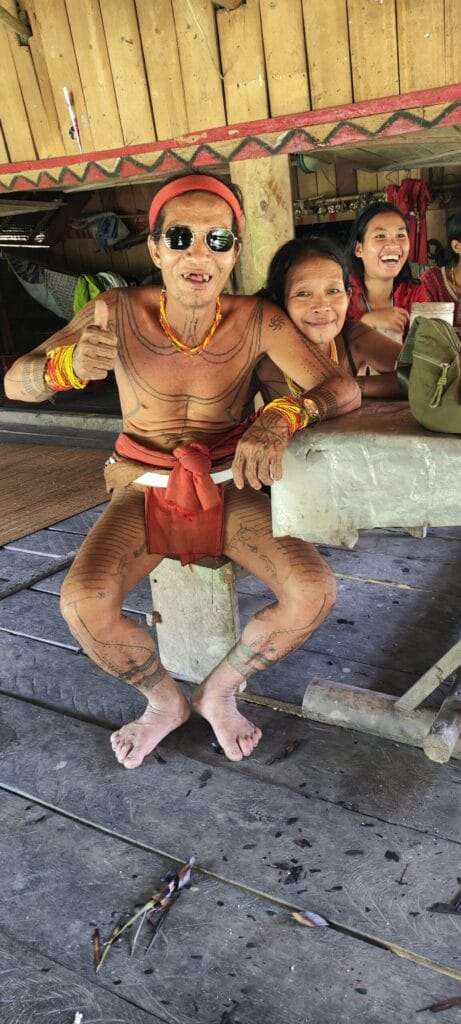
When you meet a Sikerei through Pulau Asli Tour, you are not meeting a "performer" or "tourist attraction." You are meeting someone who has dedicated their entire life to spiritual service—someone who was either born into this calling or chosen by the spirits themselves.
These individuals have spent 6+ months in complete forest isolation, memorized over 200 medicinal plants, mastered sacred chants that communicate with spirits, observed strict taboos for years or decades, and received direct teaching from the spirit world through dreams.
This is why we emphasize respect and authenticity over entertainment. The Sikerei you meet is real. Their knowledge is real. Their spiritual practice is real.
When you visit with us, you are not observing a cultural show. You are entering a living tradition that has survived for thousands of years—a tradition carried by individuals who chose (or were chosen for) the most demanding path in Mentawai society.
Experience the Sikerei Tradition Firsthand
Through our Mentawai Tribe Tour packages, you can witness authentic Sikerei ceremonies, learn about traditional healing practices, and understand the spiritual worldview that has guided the Mentawai people for generations.
We work directly with Sikerei families who have agreed to share their knowledge with respectful visitors. This is not exploitation—it is cultural exchange based on mutual respect and fair compensation.